
 0
0
 0
0
b.c1834 – d.1914
Trace document:
https://www.ancestry.co.uk/invite-ui/accept?token=B1WjkWwObRaYPN7YKcpLu62xRERplPvMoLTerOcWzxM=
Background
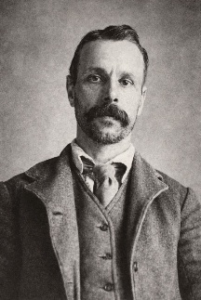
Henry Challis was admitted to Manor Asylum on 1st September 1899 suffering from “dementia”. He was 65 years old, married and a labourer. The supposed cause of his dementia was “excessive drinking”. The only other piece of identifying information was his abode of Bath Court, Bath Street, Shoreditch.
Childhood and Early Life
Henry Challis was born circa 1834 in Waltham Abbey, Essex to James & Elizabeth Challis (sometimes spelt Chellis) and was baptised on 8th March 1835 at St. Lawrence, Waltham Abbey. His parents may have been James CHELLIS and Elizabeth NORTH who married on 11th November 1816 at Waltham Abbey.
The town is named and renowned for its former abbey, the last in England to be dissolved, now the Abbey Church of Waltham Holy Cross and St Lawrence—a scheduled ancient monument and the town’s parish church. There are still buildings in the town today that were built in the 16th century.
At the time of the 1841 census, Henry was 6 years old and living with his parents, James & Elizabeth and brothers Ambrose (25), Job (21) and George (14) in Broomstick Hall, Waltham Abbey. Henry’s father and two eldest brothers are all ‘agricultural labourers’.
Ten years later in 1851 Henry was living in Malting Yard, Waltham Abbey with his parents James (64) and Elizabeth (59). Henry and his father are both ‘labourers’. The family has one lodger. Malting Yard was a narrow thoroughfare in the bustling Highbridge area of Waltham Abbey.
Marriage and children
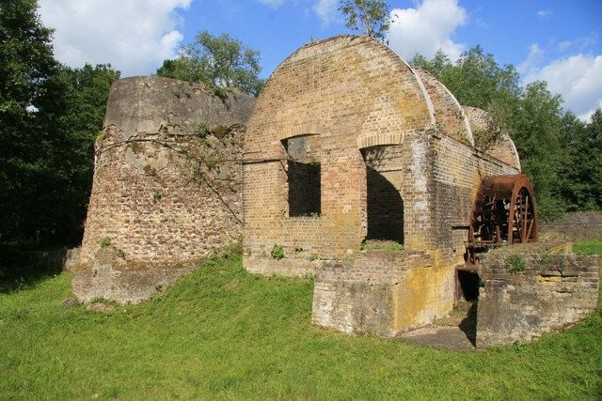
On 25th March 1855 Henry married Emma MARDEL at Waltham Abbey. Emma had also been born in Waltham Abbey circa 1836. By 1861, the couple were living in Silver Street, Waltham Abbey with sons Henry aged 5 and Charles aged 3. Henry is now a ‘gunpowder maker’, working at the Royal Gunpowder Mills situated on the Millhead Stream nearby. Waltham Abbey was one of three Royal Gunpowder Mills in the UK.
A gunpowder maker in the 1850s operated or worked in a powder mill, a highly dangerous and isolated factory. They specialized in refining black powder by grinding and mixing saltpetre (potassium nitrate), charcoal, and sulphur. Manufacturing gunpowder was dangerous because even a tiny spark from metal machinery could trigger an explosion. Many mills experienced devastating blasts and loss of life including Waltham.
For some reason, between the two census, Henry and Emma moved to London and in 1871 we find them living at 3 Wakefield Place, St. Luke Finsbury with an expanded family: Charles, Henry, Job, Emma and George. Henry is still a ‘labourer and his eldest two sons Henry and Charles are both ‘wood choppers’.
Children:
Henry born 6.4.1856; bapt. 4.5.1856 Waltham; m. Jane Ada PILLIVANT on 8 Apr. 1878
Charles born c1857; m. Jane Eliz. CLEMENTS on 3 Sep. 1877
Mary Ann born 25 Feb 1860; bapt. 21 Sep 1860 Waltham
William born 28.7.1862; bapt. 8.2.1873;
Job born Q1 1865 Shoreditch
Emma born 26.1.1867; bapt. 8.2.1873;
George born 12.4.1870 Holborn; bapt. 8.2.1873; m. Annie Julia KING on 10 Aug. 1890
Elizabeth born 12.1.1872 Shoreditch; bapt. 8.2.1873
Edward born Q2 1878 Shoreditch; bapt. 8.6.1879
Henry’s Asylum Journey – Hoxton House
Henry was admitted to Hoxton House on 2nd April 1881. Prior to this there had been no indication of any health problems. Hoxton House took both private and pauper patients. Henry was discharged as “recovered” a few months later on 26th August 1881.
While Henry was in Hoxton House, his wife and children William (21), Job (18), George (11), Edward (3), Emma (14) and Elizabeth (9) were living close by in 5 Bath Court, Shoreditch.
Transfer to Banstead Asylum, then Dorchester
The Lunacy Patients Admission Register states that on 23rd December 1881, Henry was admitted to Banstead Asylum in Surrey and discharged 14 years later on 30th October 1895 ‘not improved’ (i.e. sent to another asylum).
This date doesn’t tally with 1891 census which shows Henry living in the family home in Bethnal Green with his wife and children: Charles*, Sarah and Edward. The following are also listed as their children but I believe this could be an error and more likely they are grandchildren: Jane, Ada, William, Emily and Elizabeth.
[*the census describes Charles as single and yet he married Jane Clements in 1877; there is though a possible death for Jane in 1888]
Life would have been difficult financially for the family with Henry not working and Emma must have struggled financially – perhaps this is why she was charged with stealing in 1882 (see below).
Morning Advertiser – Saturday 11 March 1882
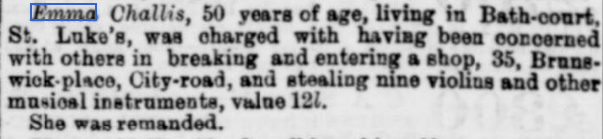
On leaving Banstead, at the end of October 1895 Henry was transferred to Herrison Hospital (the Dorset County Asylum in Dorchester). I find it incredibly sad that he was sent so far away from his family; I doubt they would have had the resources to travel such a distance in order to visit him.
Transfer to Horton
After a stay of almost 4 years in Dorset, Henry was transferred yet again, this time to Horton Asylum on 1st September 1899 (he was now 65 years old). On examination at Horton, it was observed that Henry “is restless and excited at times and at others he will sit for hours in one position without doing anything’. His wife says that “since he left Hoxton House he does not do any work … he will not go out to look for it”. A few months later on 23rd January 1900 he was discharged as “relieved” and sent to another asylum – possibly Manor.
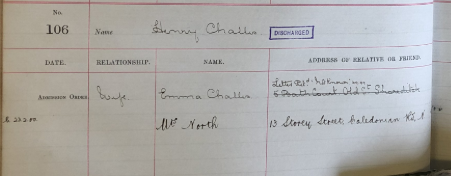
The below entry from the Visitors’ Book shows that Henry was visited by his wife although unfortunately it doesn’t give us a date. There was also another visitor, a Mr North of Storey Street, Caledonian Road (Islington). Mr North is probably George Christopher North who is listed in the Electoral Roll for 1900 at this address. Unfortunately, I cannot find a connection between him and Henry.
On 7th December 1907 Henry was transferred for the final time to Long Grove where he died on 1st October 1914.
Copyright
If you use the published stories, partly or completely, written by volunteers of the Friends of Horton Cemetery charity (Reg. No. 1190518), please acknowledge the volunteer who wrote the story by name, acknowledge the Friends of Horton Cemetery expressly and its registration number, and include this link to the STORIES section of the website https://hortoncemetery.org/the…/horton-cemetery-stories/
Donate
Occasionally, people ask how they might financially contribute to our charity. There is a Donate link at the foot of each page of the website. All donations will be directed towards continuing efforts to restore and ultimately maintain Horton Cemetery. We thank you for your support.