
 0
0
 0
0
b.1864-d.1903
Horizontal Tree View – Ancestry
Henry’s family
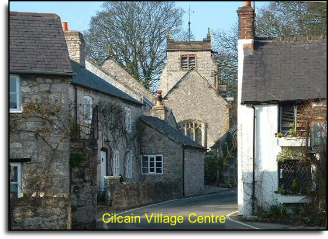
Henry’s father John, a farmer, had married Phoebe Williams on 17th April 1860 in St Anne’s Church, Aigburth, Liverpool, Lancaster. Henry, the second eldest of six children, was born on 24th November 1864 in Cilcain, Flintshire, Wales (see photo); he was christened there on 15th January 1865.
On 2nd April 1871, the census recorded Henry’s 40-year-old father John as being a farmer and landowner of Four Crosses Farm in Cilcain, a village near Mold in north-east Wales.
Henry’s mother Phoebe, aged 39, was pregnant again and described as being a farmer’s wife as well as being the mother of John aged 9, Henry aged 6, Thomas aged 3, and Arthur aged 2. They had one servant to help in the home. Also, there that night, was Henry’s great-uncle Hugh Cheney, a retired farmer and freeholder. Henry’s sister Margaret Ann was born later that year and his last sister, Mary Emily, was born in 1874.
An apprentice draper in Birkenhead
By the time the next census was taken on 3rd April 1881, 17-year-old Henry had left home, and was by then an apprentice to draper John Roberts while living with him and his family at 63 Argyle Street in Birkenhead, Cheshire. This would have been an apprenticeship of between five and seven years.
A move to London – and admission to the workhouse
Having completed this, it seems that Henry headed towards London in the hope of finding work. What led him to be admitted into the St Mary’s Workhouse Infirmary in Islington on 18th July 1887 is unknown, but he was later discharged on 12th August.
Liverpool
Henry then found work as a draper in Liverpool, and the 1891 Census records him as being one of two lodgers living at 21 St Vincent Street with a German couple named Christian and Anne Stoll. Henry’s father was aged 69 when he died in 1900.
A return to London
Henry, for whatever reason, must have decided to take his chances once again down in London as the 1901 Census recorded him on the night of 31st March as working as a draper for Hope Brothers Ltd. They were a well-known men’s outfitters and clothing manufacturers that had been founded by Thomas Peacock in Littleport, Cambridgeshire in 1882. Under the “live-in system,” employees like Henry were provided with food and a bed as part of their wages in the building’s upper-floor dormitories at 84, 84A, 86, 88, Regent Street, London.
The company strictly monitored their curfews, behaviour, and social lives, holding the authority to terminate employment on the spot for minor workplace infractions.
Destitute
Later that year on 21st November 1901, 37-year-old Henry was admitted into the City Road Workhouse in Holborn. The following day, at his own request, Henry discharged himself. Sadly, Henry found himself back at the workhouse on Christmas Eve. Settlement papers record that Henry was destitute and the son of John Cheney of Queen’s Ferry, Flintshire, Wales. The papers also recorded that Henry was single, a draper and that his faith was of the Church of England.
Transfer to Horton Asylum and death
On 7th March 1902, Henry was admitted into the Ishmail Ward in the Liverpool Road Workhouse in Islington where he stayed for a year until the 17th March 1903 when he was transferred to the Horton Asylum in Epsom, Surrey.
Information on Henry’s death certificate was a surprise when it recorded that Henry had been a “Draper of H.M. Prison Pentonville Caledonian Road”. It also stated that Henry had died on 24th April 1903 from pyonephrosis syphilis.

Henry was buried in grave 212 in the Horton Estate Cemetery on 29th April 1903.
On 29th September 1903 the Poor Law and Settlement Records show that the St Mary’s authorities had agreed to pay £3 10 shillings for Henry’s costs while at Horton Asylum and for his funeral expenses of £2 10 shillings, making a total of £7 payable.
Copyright
If you use the published stories, partly or completely, written by volunteers of the Friends of Horton Cemetery charity (Reg. No. 1190518), please acknowledge the volunteer who wrote the story by name, acknowledge the Friends of Horton Cemetery expressly and its registration number, and include this link to the STORIES section of the website https://hortoncemetery.org/the…/horton-cemetery-stories/
Donate
Occasionally, people ask how they might financially contribute to our charity. There is a Donate link at the foot of each page of the website. All donations will be directed towards continuing efforts to restore and ultimately maintain Horton Cemetery. We thank you for your support.