
 0
0
 0
0
1866-1907
Early days
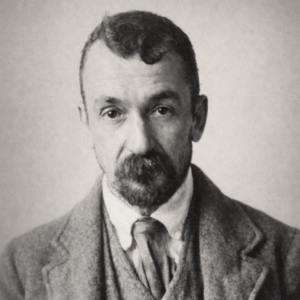
John Vickery was born on 8 July 1866 at 3 Union Terrace, Limehouse in London’s dockland. This was the home of his parents George Vickery, a twine spinner, and Mary Bills (or Bells).
George and Mary already had seven children: John had five older sisters (Harriet, Mary, Susan, Sarah and Eliza) and two older brothers (George and Thomas). Another boy (William) was born in 1868.
The 1871 Census recorded the family at 7 Princes Place, Rotherhithe. They were still there in 1881, with two more surviving children (Alice 7 and Henry 4). John aged 14 was working as a twine spinner like his father.
Marriage, children and insanity
John married Ada Pealing at All Saints church in Newington on 28 March 1891, just before the 1891 Census. While the marriage register records his occupation as “miller”, the census taken just a week later records him as a labourer, in lodgings with Ada in Bermondsey.
A child, Beatrice Ada, was born in 1893 but she died just a few months later. We can find no more live births for John and Ada until December 1904 when their son Henry was born. Henry was evidently a poorly child: at two weeks old he was baptised privately.
Another son, John William, was born in September 1906 and baptised in December at St Marys in Rotherhithe. Henry, now two years old, was received into the Church at the same time.
Ada was pregnant once again in October 1907 when her husband John started to behave strangely. In early November she told the medical examiner at Bermondsey Workhouse that “her husband has been strange in manner for last 4 weeks. He wandered away from home at 9 pm & did not return until 4 am next day. Goes to bed in the middle of day. He has not brought any money home for 4 weeks although in constant work. She thinks he has lost money in betting & is worried about it.”
The medical examiner noted that “He appears to have lost his memory & did not know how long he had lived at his present home. His speech is slow & slurred. His tongue tremulous, his pupils are unequal & sluggish. He denies having had syphilis but says his wife has had two miscarriages.”
John was admitted to Horton Asylum on 5 November 1907. There his mental state was diagnosed:“He cannot orientate as to time or place. His memory is much impaired & he is weak minded. Childish & does not understand what is said to him & is lost as to his surroundings. He has no hallucinations or delusions. He is quite happy & contented & does not realize his position. His speech is slurred & paralytic, pupils fixed & unequal. Knee jerks cannot be obtained. Is a case of general paralysis in a late stage. Habits dirty.”
John died just 3 days later. The following information was sent to the Coroner:
The above-named patient was admitted on the 5th November, 1907, suffering from General Paralysis. He was very constipated and an enema was given with good result. Temperature was 98.6 on admission. He passed urine at the time of the enema but it was found necessary to pass a soft rubber catheter on the evening of the 6th, when about 5 ounces of urine were withdrawn. This was repeated on the morning of the 7th, when 10 ounces were withdrawn. He vomited twice on the 6th, which became more severe on the 7th, and he collapsed and died at 4:35 a.m. on the 8th.
Postmortem: The bladder was extensively diseased, thick and inflamed. The vortex of the bladder was ulcerated and gangrenous and had formed an adhesion to the abdominal wall. The urine had apparently not extravasated into the abdominal cavity and the slight peritonitis present appeared to be the result of the inflammatory condition of the bladder.
The patient stated to Dr Elgee that before his case here he was kicked in the abdomen, but his wife on being interviewed did not know of any injury having occurred. He was unable to give any details. There was no evidence of injury to the abdominal wall, either superficially or deep.
This statement of the patient loses its importance owing to his mental condition. He was weak-minded, childish, lost to his surroundings and scarcely able to make himself understood. Mental and physical signs of General Paralysis were well marked. He had lain quietly in bed since admission and gave no trouble.
The bladder disease was of some duration, probably some months.
John Vickery was buried at Horton on 14 November 1907 in plot 37b. He was just 40 years old.
More tragedy
Following the death of her husband, Ada became homeless and destitute. She and her two sons Henry and John were admitted to St Olave’s workhouse in February 1908. John was quickly removed to the infirmary but died shortly afterwards. Henry was sent to the Hawthorns children’s home in Peckham. Ada was to remain in the workhouse for six months; her baby daughter Florence was born there in May but survived only a few weeks.
What became of Ada and Henry?
Ada was permitted to leave the workhouse in August 1908. We have not been able to find her in the 1911 Census (her name was entered on her mother’s census return but then crossed out). She was re-admitted to St Olave’s workhouse several times in 1912 and 1913, and for a few months up to September 1913 she was living with her son Henry at 36 Cherry Garden Street before they both returned to the workhouse. We lose track of Ada after she was discharged from the workhouse at her own request in October 1913.
In the 1911 Census, Henry was listed at St Ann’s children’s home in Herne Bay. He was returned to the workhouse for discharge in March 1913, and was discharged into his mother’s care, but six months later they were both back in the workhouse. Henry was immediately sent back to the Peckham Homes. In the 1921 Census he was recorded as an inmate of the Bridge Training Home in Witham, Essex. We have found no definite sightings of him after that.
Copyright
If you use the published stories, partly or completely, written by volunteers of the Friends of Horton Cemetery charity (Reg. No. 1190518), please acknowledge the volunteer who wrote the story by name, acknowledge the Friends of Horton Cemetery expressly and its registration number, and include this link to the STORIES section of the website https://hortoncemetery.org/the…/horton-cemetery-stories/
Donate
Occasionally, people ask how they might financially contribute to our charity. There is a Donate link at the foot of each page of the website. All donations will be directed towards continuing efforts to restore and ultimately maintain Horton Cemetery. We thank you for your support.