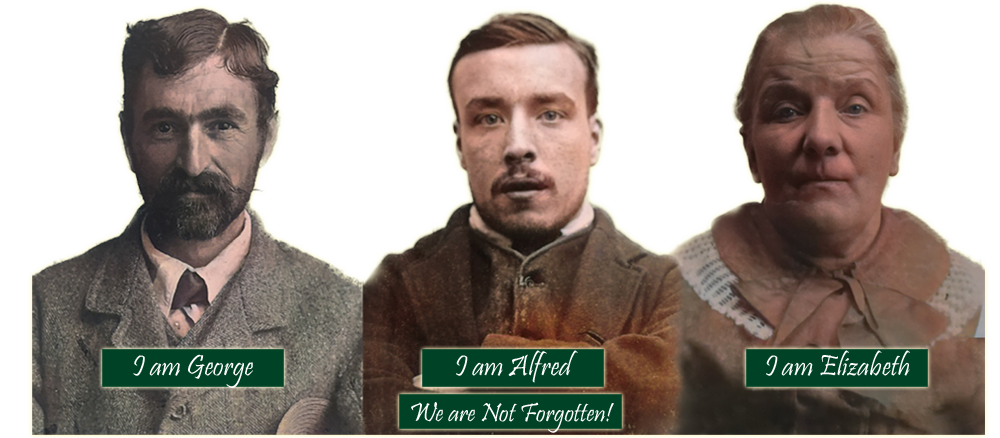
The volunteer authors of the Friends of Horton Cemetery charity have so far researched, written and published almost 500 stories.
Each story tells us about mostly ordinary, everyday people who lived over one hundred years ago, ended their days in one of the five asylums in Epsom and were buried in Horton Cemetery.
Our volunteers are all social heroes with huge hearts who have collectively given tens of thousands of hours of their time and continue their efforts to bring you these precious stories.
A full list of our authors is below, with stories grouped according to who wrote them. Please take time to browse and enjoy.
If you use the published stories, partly or completely, written by volunteers of the Friends of Horton Cemetery charity (Reg. No. 1190518), please acknowledge the volunteer who wrote the story by name, acknowledge the Friends of Horton Cemetery expressly and its registration number, and include this link to the STORIES section of the web site https://hortoncemetery.org/the-people/horton-cemetery-stories/
Asylum Cemeteries
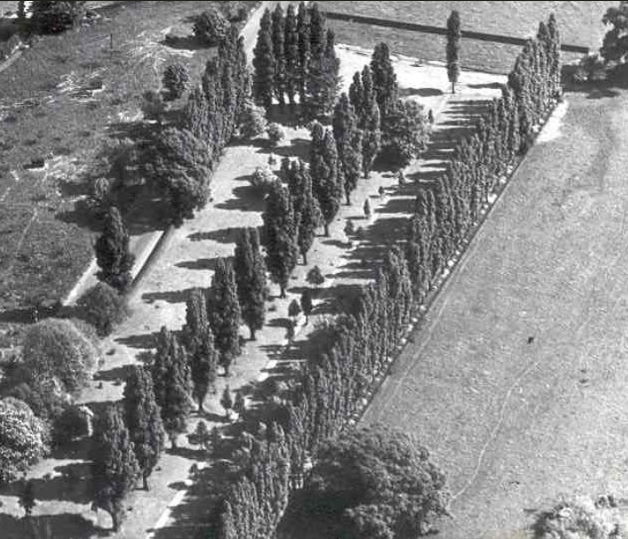
The common fate of people in our stories was to live for a period in an Epsom-based UK County Asylum(s), die in a UK County Asylum and, if their body was not claimed after death, be buried unnamed, with minimal grave marking in Horton Cemetery. Today even the markers have gone.
There are hundreds of thousands of such graves in England, Wales, Scotland and Ireland.
The UK County Asylums, the people who worked in them and the many hundreds of thousands of patients who passed through them, either to recovery or death and an unnamed grave, are an important but little-known part of the history of the British Isles.
Our Mission
Our volunteer researchers are the foundation, engine and propellant of our charity. They are bringing “back to life” and telling the stories of thousands of patients with mental health issues or physical and learning difficulties who died in one of the Epsom asylums between 1899 and the late 20th century. In many cases these people have left just a small footprint in our national records.
We hope that our community history project, an example of ‘everyday heritage’ preservation, will encourage existing similar local history initiatives across the UK and elsewhere.
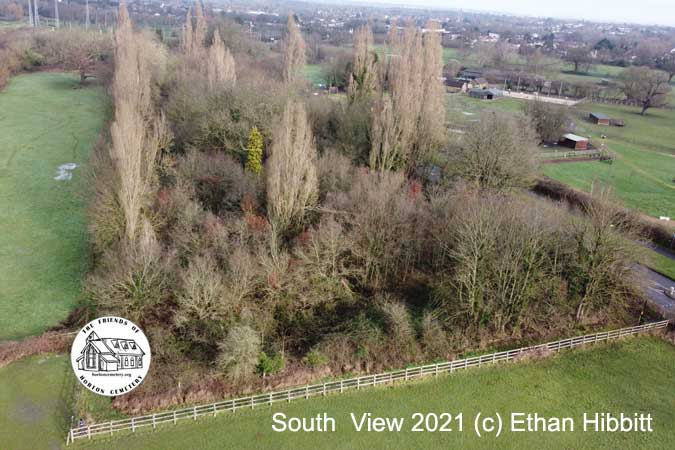
Horton Cemetery
This tragic collection of almost 9,000 thousand people, who all too often have been lost and forgotten, were mostly misunderstood, disrespected, stigmatised, shamed, shunned and feared during life.
Our intention is to memorialise this host of lost and forgotten people by reclaiming their last resting place, building a legacy through their stories, and encouraging others to continue and initiate similar projects.
They were anonymised at death and subsequently further disparaged when their last resting place was allowed, or perhaps encouraged, to fall into a state of disregarded ruin by the person who bought this cemetery from the NHS – one of its less glorious actions – in 1983.
Those buried and probably their family members suffered the shame, stigma and perhaps ostracisation that, even today, is all too often associated with mental health and disabilities.
An implicit but unwritten objective of our community project is to try and show that gaining more awareness of mental health problems and neurodiversity should encourage our understanding, empathy and support and recognition of the diverse life experiences and dignity of these people in the past as the present.
Our volunteers
Our volunteers are community minded and freely give their precious time and demonstrate what can be done through a community project. They give effort and energy to things that they care deeply about.
For the most part, the volunteers choose to cover research costs as a way of giving to the charity (Ancestry, Find My Past, Government Records Office for the Birth, Marriage and Death certificate copies etc). Without access to services such as these, we would not be able to fulfil our community project objectives.
The educational profile of our volunteers varies widely, and everyone is welcome for the offer they make to work as part of the project. All our volunteers demonstrate generosity of spirit, endurance and tenacity in their research and skill in their writing of the stories. They take pride in knowing that their name is at the top of their story and that they have brought one more person back to life – remembered not forgotten.
Our team of volunteers work cooperatively, constantly supporting and encouraging each other. This is often demonstrated during the research and development of a story when it is quite possible to get “stuck” or end up in a blind alley. Our volunteers are encouraged to sing out and ask for help using WhatsApp, a telephone call, or email. They quickly learn that there is much help to be had all around them. Our team of volunteers is geographically dispersed, but this does not stand in the way of them being a very effective team.
The Process of Writing
Our volunteers are encouraged to use their own writing style; we have no mandated writing style. We have very few writing “rules”, except that anything stated as a fact must be backed up with proof, which usually consists of pointing to a particular reference (e.g. Census return, marriage details, baptism details etc.)
We have a policy of peer review for our stories before they are published. The reviewer and reviewee will work together in a cooperative, friendly and encouraging way to agree the final version of the story before it is published.
Our volunteers are as free as the air. There are no schedules or deadlines for our volunteers, to fit with people’s varied life-styles and commitments. They do their research and write when it suits them, when they can fit it in. Our volunteers can leave whenever they like, take extended breaks etc. We want all our volunteers to be relaxed and happy and enjoy their research.
The variety of current volunteers is inspiring. We want people who volunteer for this project to think of it very much as a hobby and NOT a job. To also think of it as an unusual mission, bringing long dead people with mental health problems or learning difficulties “back to life” so that we can ALL learn things from the results.
If you would like to learn more about becoming a volunteer with our community project and helping to bring these abandoned and lost mental health / learning difficulties patients of yesterday “back to life” please go to our Contact Us page and get in touch with us.


