
 0
0
 0
0
b.1847-d.1911
Beginnings
Fanny Hervey was born Fanny Emma Russell in 1847, in the small village of Orleton, in Herefordshire, where her father John Russell was a shopkeeper. John and his wife Ann Bedford had married in her home village of Claines in Worcestershire in May 1837. Fanny was the last born of John and Ann’s 6 children, of which two died in infancy.
In the 1850’s the family moved to the neighbouring village of Luston where Fanny’s father died in May 1862, at the age of 52.
Much of what follows in this story has been drawn from newspaper reports of her many court appearances in the 1880s and 1890s, both as accused (in the criminal courts) and plaintiff (in Chancery).
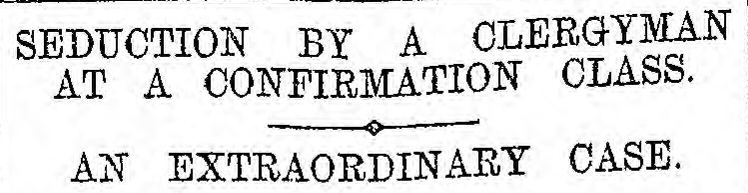
Seduced by the curate
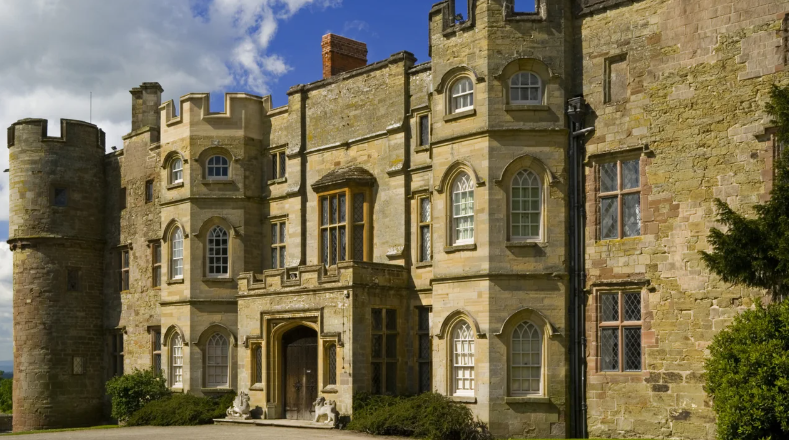
Around the time that her father passed away, Fanny was enrolled in the local curate’s confirmation class. The curate, Reverend William Trevelyan Kevill-Davies, was a wealthy landowner. Then aged 36, he resided at nearby Croft Castle with his wife Ellen, their nine children, and 18 servants.
Over the next two years, an intimate relationship developed between the curate and young Fanny, whom he addressed in letters as “My Darling Pussy”.
As later revealed in court, Davies first seduced Fanny in June of 1864, when she was just 16 years old. The relationship continued for some months thereafter and Fanny became pregnant in the early months of 1865.
No doubt anxious to conceal all this from his wife and parishioners, Davies sent the girl to London, armed with a letter of introduction which he wrote with a disguised hand and signed as “Mrs Parker”. He gave her money, and in October 1865 he entered into a deed of covenant whereby he granted Fanny an annuity of £150 per month until such time as she either married or died. Fanny’s mother Ann and one of her brothers were also parties to this deed.
Birth of a daughter
A daughter, Eva Russell, was born on 6 November 1865 at 21 Drayton Grove, Brompton. She was baptised at St Luke’s in Chelsea in May 1866.
A change of name
Around this time Fanny adopted the surname Hervey (perhaps after the then popular novel “Fanny Hervey, or, the Mother’s Choice”) and claimed to be a widow.
Liverpool
Fanny’s oldest brother John had moved to Liverpool in the 1850s and built a successful silk drapery business there. It seems that Fanny and Eva spent some time there in the 1860s, for Davies alleged later that, in 1867, Fanny had travelled from Liverpool to London, followed him and his wife in a cab, and told his wife what had happened in 1864.
Back in London
By 1871 Fanny, her mother Ann, and little Eva were in London in lodgings at 57 Thistle Grove, Kensington
Disputes, Prison, Insanity
Fanny was very unhappy with the clause in the deed of covenant that prevented her from marrying and wrote many letters to Davies pleading for the clause to be removed.
In 1875 a further deed was executed, affirming the terms of the 1865 deed, providing a £1,000 settlement for daughter Eva, and £50 a year for Fanny’s mother, Ann Russell. In addition, leasehold property was to be held in trust for Fanny’s benefit, at 54 Thistle Grove (later renamed Drayton Gardens) in Chelsea. However, a new condition was introduced: forbidding Fanny from molesting Davies, his wife, or any of his family, under penalty of losing the allowance.
Fanny’s mother Ann Russell died in 1880 at her daughter Elizabeth’s cottage in Ambleside.
The house in Drayton Gardens appears to have been let to tenants. The 1881 Census finds Fanny and Eva living in Gordon Road, Ealing.
By this time Fanny’s mental health was starting to deteriorate, and she was becoming increasingly agitated and angry at Kevill-Davies for his treatment of her. In June 1883, the London Evening Standard reported that:
Fanny Emma Russell, a well-dressed woman, residing at Thistle-grove, Kensington, was charged with behaving in a disorderly manner at Queen’s-gate.
Constable Bridgeman, 83 B, said the prisoner created disturbances outside a house in Queen’s-gate, threatening a gentleman and lady residing there. The magistrate was informed that she had been charged twice before at other police-courts, and had been bound over to keep the peace.
Davis, residing at Queen’s-gate, said the prisoner frequently annoyed him; she had no claim on him, and had threatened to murder him and throw vitriol in his face. He asked for protection.
Mr. Horace Avory, barrister, applied on behalf of Davis, and asked that the prisoner should find one surety in £20 to keep the peace for three months. Subsequently Mr. Avory asked that the prisoner should be committed, as her conduct was outrageous.
Mr. Sheil said medical evidence could be given to prove that she was insane and suicidal.
Dr. Glanville, of Fulham-road, said he had attended the prisoner for twelve months, and found her not accountable at times for her actions.
The magistrate ordered that she should be taken to the workhouse as insane, and committed to proper care and custody.
Faced with such “molestations”, Davies stopped paying the £150 annuity.
Fanny was admitted to Peckham asylum on 25 July 1883 and was released in early September. It seems likely that she then went to stay with her sister in Ambleside, for she was admitted to the Carlisle asylum in October and was confined there until April 1884, when she was removed to the Banstead asylum. She was released from Banstead at the end of April.
(In November 1883, while her mother was confined in Carlisle, daughter Eva married Dr. Francis Ferratus Glanville who had given evidence at Fanny’s trial. )
It wasn’t long after her release from Banstead that Fanny was causing trouble again. In May 1884, Fanny was convicted at Bow Street police court of “threats and damage” and was given 3 months imprisonment in default of £10 recognizances and a £5 surety to keep the peace. On 5th June she was ordered to be committed to Banstead Asylum from Millbank prison.

She was released from Banstead in February 1885 but, in May of that year, Fanny was in court again, for breaking glass at a lawyer’s office, assaulting the solicitor who acted as trustee for the Drayton Gardens property, assaulting a policeman, and for subsequently attempting suicide in the cells at Bow Street police station. She was given 6 months in prison and shortly afterwards committed from Millbank prison to Colney Hatch asylum.
In April 1887, Fanny was admitted to Grove House, a small private asylum in All Stretton, Shropshire. This suggests that she had journeyed back to her home village, possibly to confront Davies, but no reports can be found. She remained at Grove House until August when she was removed to Peckham asylum. She was confined at Peckham until January of 1888.
In Chancery
While she was confined, Fanny’s lawyers were busy suing Davies for the arrears of her annuity, on the basis that she had been insane at the times she had molested him and his wife and was thus not responsible for her actions. Proceedings commenced in the Court of Chancery in July of 1887: the whole story of the seduction was aired in open court over several days and was widely reported in national newspapers.


Dr Glanville again gave evidence as to Fanny’s insanity, in the course of which the judge remarked that if the facts were true,
“it was an ugly story, and his lordship could not understand how any gentleman could allow the case to come to court”.
The case was ultimately settled out of court, with Davies agreeing to reinstate the annuity and pay all the arrears.
Further threats and broken windows

In January 1890, Fanny was in court again, this time for threatening one of Davies’s sons. Her doctor, Isidore Bourke, entered into recognisances on her behalf and she avoided imprisonment.

A few months later, it was alleged that Fanny had threatened to kill Davies and herself. She acquired a revolver for the purpose. She travelled to Worcester, en route to Croft Castle, and from there sent Davies a telegram saying that something terrible would happen if affairs were not settled. She was arrested and after some delay stood trial in West London in July. After hearing evidence, the magistrate adjourned the case, and the charges were subsequently withdrawn.
Things quietened down for a while after that but in May 1892 Fanny was breaking lawyers’ windows again with her umbrella. This report is from the Weekly Times & Echo:
SCENE IN A LAWYER’S OFFICE
Strange Disclosures
At Bow-street, yesterday afternoon, Fanny Emma Harvey, of 54, Drayton-gardens, was summoned for committing wilful damage at the office of a firm of solicitors in Essex-street, Strand. The defendant, a ladylike looking person, about forty-live years of age, conducted herself in an extraordinary way. She passed up and down in front of the dock in a most excited manner, and in loud and emphatic tones interrupted the proceedings at frequent intervals.
It appeared that at a very early age the defendant gave birth to an illegitimate child the father of which settled an annuity upon her, which was to cease at her marriage. In 1875, the defendant desired to marry and the settlement was altered. By the new arrangement she was to be allowed a house in Drayton-gardens so long as she did not molest the father of her child, and Mr Abbott (now dead) and Mr Dore, member of a firm of solicitors in Essex-street, were appointed trustees.
At Michaelmas the tenants of the house in Drayton-gardens went away, leaving the place in a bad state of repair. Defendant would not allow the surviving trustee to let the house, but brought an action against him for heavy damages. The solicitors acting for Mr Dore obtained an order for better particulars, and defendant then went to Mr Dore’s office and Broke Several Panes of Glass with her umbrella.—Mr Besley, who appeared for the complainants, detailed the circumstances of the case as above, and said defendant had been confined in a lunatic asylum.—
Defendant (excitedly) : He is a villain ; he is a fraud ; he has sold my property. Through the doctor and fraud they made me ill. I am now living without water; they are monsters and murderers. A man destroyed the happiness of my life, and now they want to drive me away from home.
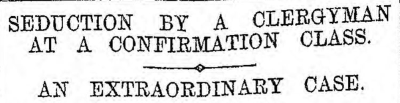
A solicitor in court said he would represent the defendant if she would allow him to do so. She had had a great deal of trouble. When quite a little girl she was seduced by a clergyman. —
Defendant: Yes, the dirty scoundrel; at confirmation. I have had to suffer. Beware of those Confirmation Classes, girls and mothers of England. I knew not what harm was until then. They have ill-treated me until I can scarcely bear it.
She promised the magistrate that she would behave herself and was discharged on her own recognizances.
Bankruptcy of the Rev. Davies
Rev. William Trevelyan Kevill-Davies was declared bankrupt in December 1894, with debts of £62,000, and assets of just £500.
Attempted Suicide
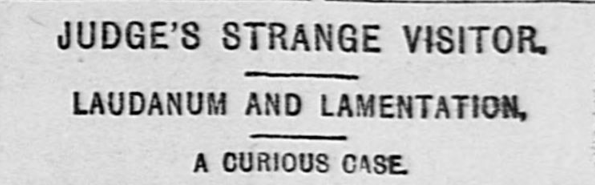
In August 1899, Fanny called at the home of Sir Arthur Kekevitch, a high court judge, with whom she had a grievance relating to the sale of the property that Rev Davies had provided for her. When told that he was not in, Fanny produced a bottle of laudanum and proceeded to drink the contents. The police were called, and Fanny was charged with attempted suicide. She was remanded and sent to Holloway prison. From there she was sent to the asylum at Colney Hatch. From Colney Hatch she was transferred to Camberwell, and from Camberwell to Fisherton House, where she remained until August 1903.
Final days
Before long, Fanny was again confined in the asylum system. It appears that in October 1903 she was ordered to be admitted to Banstead asylum. From there she was admitted to The Manor in March 1904; from there she was transferred to Fisherton House. Finally she was transferred to Long Grove where she remained until her death on 25th August 1911.
The medical notes record her insistence that she was the victim of a cabal of Treasury officials, judges, and the Home Secretary; that a young doctor who had married her daughter had her committed to an asylum so as to defraud her of her property.
Fanny was buried at Horton on 29th August 1911 in grave 1073b.
What became of the daughter?
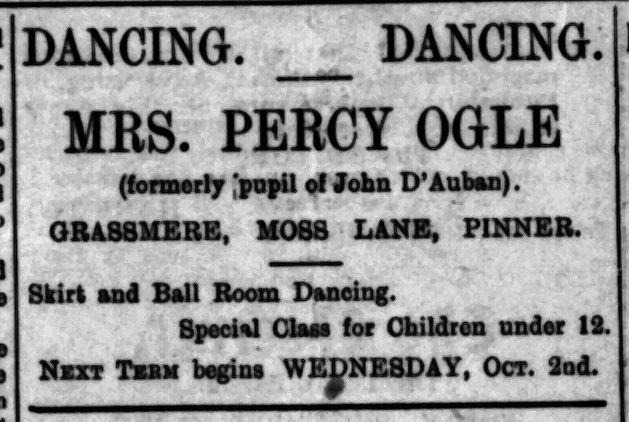
Eva was divorced by Dr Francis Glanville in 1893 on the grounds of her adultery, with a Stanley Watson. Once the decree was final in 1896, she married engineer Percy Ogle, with whom she subsequently had 4 children. In 1901 they were living in a large house in Pinner with 6 servants. However it soon became clear that Ogle did not have the means to sustain this lifestyle. Around 1905 he deserted Eva, leaving her with the children and destitute.
To provide an income for her family, Eva started in business as a dancing teacher. In 1911, she sued Percy for maintenance: Ogle pleaded lack of means, but the court ordered him to pay £1 a week.
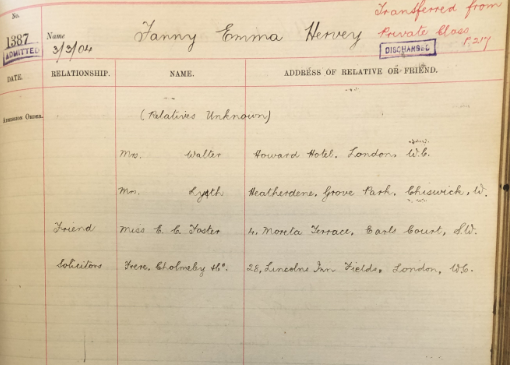
The Visitor Book for Manor asylum
Copyright
If you use the published stories, partly or completely, written by volunteers of the Friends of Horton Cemetery charity (Reg. No. 1190518), please acknowledge the volunteer who wrote the story by name, acknowledge the Friends of Horton Cemetery expressly and its registration number, and include this link to the STORIES section of the website https://hortoncemetery.org/the…/horton-cemetery-stories/
Donate
Occasionally, people ask how they might financially contribute to our charity. There is a Donate link at the foot of each page of the website. All donations will be directed towards continuing efforts to restore and ultimately maintain Horton Cemetery. We thank you for your support.