Sir Frederick Walker Mott and the Epsom Cluster of Mental Hospitals
5 September 2026
The scientist behind the Mott Clinic at Horton
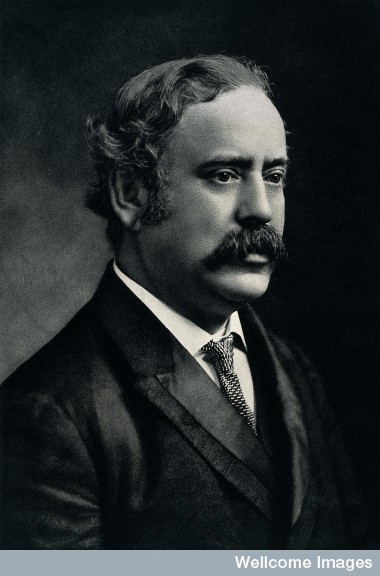
Sir Frederick Walker Mott, KBE, MD, FRCP, FRS (23 October 1853 – 8 June 1926) was one of the most important figures in the development of British neuropathology and scientific psychiatry during the late nineteenth and early twentieth centuries. His career coincided with a period in which the treatment of mental illness was beginning to move, albeit slowly, from the Victorian asylum tradition towards a medical model based upon pathology, bacteriology, neurology and laboratory investigation.
For the history of the great group of psychiatric hospitals at Epsom known as the Epsom Cluster, Mott is particularly significant. He did not run the Epsom hospitals, nor was his principal laboratory situated there. Rather, as Pathologist to the London County Council’s asylum service, Mott occupied a central scientific position serving the entire LCC mental-hospital system. The Epsom hospitals formed an increasingly important part of that system.
His investigations consequently drew upon patients, clinical observations, post-mortem material and statistics originating in the Epsom institutions. He also personally investigated at least one disease outbreak at Horton.
More remarkably, shortly before his death, Horton became the site of one of the most important medical developments in the history of the Epsom hospitals: the establishment in 1925 of a specialist centre for treating general paralysis of the insane, or GPI, using induced malaria. Within a few years the treatment centre became known as the Mott Clinic, commemorating the man whose earlier research had done so much to establish the relationship between syphilis, the brain and GPI.
The name therefore provides a direct link between the laboratory psychiatry pioneered by Mott and the extraordinary programme of research and treatment subsequently undertaken at Horton.
Early life and medical career
Frederick Walker Mott was born in Brighton on 23 October 1853. He studied medicine in London and obtained his MB and BSc in 1881 and MD in 1886. His early scientific career was rooted not primarily in psychiatry but in physiology, pathology and the nervous system.
He worked in the laboratory of the eminent physiologist Edward Albert Sharpey-Schafer between 1880 and 1882 and subsequently became assistant professor of physiology at Liverpool. In 1884 he returned to London as a lecturer in physiology at Charing Cross Hospital Medical School.
Mott’s great opportunity came in 1895, when the London County Council appointed him Pathologist to its asylum service.
This was an unusually important appointment. The LCC administered an enormous and growing population of psychiatric patients. Instead of regarding its asylums merely as institutions in which patients were to be accommodated, the Council increasingly recognised that their large patient population represented an opportunity for systematic medical investigation.
Mott was placed in charge of the LCC’s Pathological Laboratory at Claybury Asylum in Essex. Significantly, his responsibility extended beyond Claybury. The laboratory was intended to undertake and co-ordinate pathological investigation across the LCC asylum system.
The Royal Society records that the research for which Mott became particularly known was achieved in his capacity as Pathologist to the London County Council Asylums.
This position is essential to understanding his relationship with Epsom.
The creation of the Epsom Cluster
While Mott was developing the LCC’s scientific pathology service, the Council was confronting a much larger practical problem: London’s existing asylums were overcrowded.
In 1896 the LCC purchased the Horton Manor estate at Epsom, comprising approximately 1,060 acres. The original intention was extraordinarily ambitious: as many as six large institutions, potentially accommodating around 12,000 patients, were contemplated.
Five were eventually constructed:
The Manor Asylum – opened 1899
Horton Asylum – opened 1902/03
Ewell Epileptic Colony, later St Ebba’s – opened 1904
Long Grove Asylum – opened 1907
West Park Hospital – completed after the First World War and fully developed during the 1920s
Together they became known as the Epsom Cluster or Horton Estate.
The development was healthcare on an almost industrial scale. The hospitals possessed farms, workshops and extensive service infrastructure, while patients themselves provided a considerable amount of labour.
The Cluster eventually became one of the largest concentrations of psychiatric institutions in Europe.
Mott’s scientific career and the construction of Epsom therefore belonged to the same LCC project, but represented its two different sides: Epsom provided enormous institutional capacity, while Mott’s laboratory attempted to provide a scientific understanding of the diseases affecting the people inside those institutions.
Mott as pathologist to the LCC asylum system
The novelty of Mott’s appointment should not be underestimated.
The LCC had effectively created a central scientific investigator whose remit crossed the boundaries of individual asylums. His laboratory at Claybury could receive pathological material and information from elsewhere in the LCC system, while Mott himself could become involved when particular medical problems arose.
The arrangement occasionally produced professional friction. Medical superintendents traditionally possessed considerable authority within their own institutions, whereas Mott represented a central scientific service capable of investigating problems across the asylum network.
An example occurred at Horton Asylum.
Historical research into the LCC records shows that an outbreak of what contemporary sources called “the itch” occurred after patients were transferred to Horton from a private asylum. Mott was brought in to investigate.
The episode illustrates both his authority and its limitations. Horton’s Dr Bryan, who had already been studying the condition, subsequently complained that Mott’s investigation had produced no “fresh information”.
Whatever the merits of that disagreement, it provides valuable documentary evidence that Mott’s association with the Epsom Cluster was not merely nominal. He could be called personally into Horton to investigate disease as part of his LCC responsibilities.
The asylum as a medical laboratory
Mott believed that mental disease could, at least in many instances, be investigated through physical changes in the body and particularly in the brain.
His approach therefore placed considerable importance upon:
- post-mortem examination;
- microscopic examination of nervous tissue;
- bacteriology;
- chemistry;
- neurological examination;
- statistical comparison of large groups of patients;
- and investigation of infectious disease.
This was a significant change in emphasis. The enormous LCC asylum population could now be studied systematically rather than simply administered.
Mott edited the Archives of Neurology from the Pathological Laboratory of the London County Asylums, through which this research was disseminated. The publication later became the Archives of Neurology and Psychiatry.
The Epsom hospitals consequently became contributors to a much larger scientific network.
Horton, tuberculosis and Mott
Tuberculosis was a serious problem in large institutions during this period, and Mott undertook a major investigation entitled “Tuberculosis in London County Asylums”, published in 1909.
Horton featured directly in this work.
A surviving illustration associated with Mott’s study depicts the open-air veranda used for nursing tuberculosis patients at Horton Asylum. The photograph had been supplied to Mott by Horton’s medical superintendent.
Mott examined mortality and post-mortem evidence from the London asylum population in attempting to understand why tuberculosis occurred among psychiatric patients.
His conclusions need to be read critically today. He considered the environmental and dietary precautions being employed by the LCC broadly adequate, a judgement later historians have suggested may have encouraged excessive confidence in institutional conditions. Nevertheless, the investigation demonstrates how information from places such as Horton was being incorporated into systematic research covering the entire LCC asylum population.
Horton, Manor and Long Grove in neurological research
The connection went deeper than institutional statistics.
The LCC asylum network supplied human pathological material for research into relationships between mental illness, the nervous system and other organs.
One particularly interesting example concerns Dr Laura Forster, an Australian doctor and neuroscientist who worked in Mott’s laboratory.
Forster studied the ovaries of approximately one hundred deceased women who had suffered from a variety of psychiatric and neurological conditions. The material came from several hospitals, including Horton, Manor and Long Grove at Epsom.
Her research was published posthumously after her death during the First World War and subsequently contributed to Mott’s own investigations into relationships between the reproductive system, endocrine processes and mental illness.
This provides unusually concrete evidence of the scientific relationship between Mott’s central laboratory and the Epsom hospitals.
Bodies and tissue obtained following deaths within the Epsom institutions could become part of the pathological research programme overseen by Mott.
Such research also raises questions that modern historians must acknowledge concerning consent, institutional authority and the use of the bodies of psychiatric patients for research. Standards of medical consent were profoundly different from those expected today.
Mott’s greatest contribution: syphilis and General Paralysis of the Insane
The area of Mott’s work most directly connected with the later history of Horton concerned general paralysis of the insane (GPI).
GPI was one of the great medical problems confronting nineteenth-century psychiatric hospitals.
Patients could initially exhibit striking psychiatric symptoms, including changes of personality, grandiose delusions and disturbed behaviour. Neurological deterioration followed, producing abnormalities of movement and speech, seizures, progressive dementia, paralysis and eventually death.
Large numbers of patients with GPI consequently entered psychiatric hospitals.
What became increasingly apparent was that this apparently psychiatric illness had a physical cause: syphilitic infection of the central nervous system.
Mott was one of the leading British researchers establishing this relationship.
His work helped demonstrate that the organism responsible for syphilis, Treponema pallidum, could ultimately produce the devastating neurological and psychiatric syndrome diagnosed as general paralysis.
This was conceptually enormously important.
A disorder which could present as “madness” was demonstrably connected to an identifiable biological disease process.
The implication extended beyond syphilis. If one apparently psychiatric illness had a demonstrable pathology, perhaps laboratory medicine could uncover the physical causes of others.
Mott’s reputation was greatly enhanced by this work. Contemporary and later accounts credit him with making a major contribution towards establishing the syphilitic causation of GPI.
And it was this research that eventually gave Mott’s name a permanent association with Horton Hospital.
From Mott’s research to malaria therapy
The discovery of the syphilitic origin of GPI explained the disease, but initially did little to cure it.
A remarkable treatment emerged from continental Europe.
The Austrian psychiatrist Julius Wagner-Jauregg experimented with deliberately producing fever in GPI patients. In 1917 he began infecting patients with malaria, reasoning that repeated high fevers might suppress the syphilitic infection.
The treatment sounds alarming today because physicians were deliberately infecting psychiatric patients with another potentially fatal disease.
Yet GPI itself was generally progressive and fatal, and at the time there was no effective alternative treatment.
Malaria had one practical advantage: once sufficient attacks of fever had been produced, the malarial infection could itself be treated with quinine.
Wagner-Jauregg’s work eventually earned him the 1927 Nobel Prize in Physiology or Medicine.
Britain adopted malaria therapy during the early 1920s.
And Epsom became its most important British centre.
Early malaria experiments at the Epsom hospitals
The first British experiments took place outside Epsom, but the Horton Estate quickly became involved.
In 1922 Lieutenant-Colonel Sydney Price James, an authority on malaria who had served in the Indian Medical Service, experimented with malaria therapy at the Manor War Hospital at Epsom.
During the following year several LCC mental hospitals, including Horton, began trials.
The potential danger was obvious. Deliberately introducing malaria into a large psychiatric hospital created the possibility that mosquitoes might transmit the disease unintentionally to other patients or staff.
Consequently a specialist unit was required.
The Horton Malaria Therapy Centre, 1925
In 1925, the Ministry of Health and Board of Control, working with the London County Council Mental Hospitals Department, established a dedicated malaria-therapy centre at Horton Mental Hospital.
A separate villa was allocated to the work and an associated specialist laboratory was created.
Colonel S. P. James played a leading role in establishing it.
On 25 May 1925, infected mosquitoes carrying a carefully selected strain of Plasmodium vivax were allowed to feed upon two female patients undergoing treatment at Horton.
The centre developed methods for maintaining malaria parasites and infecting mosquitoes under controlled conditions. Infective material could then be supplied to hospitals elsewhere.
Horton consequently became not simply a psychiatric hospital but a national centre for malaria therapy and subsequently for malaria research.
Why it became the Mott Clinic
The malaria centre was initially associated with Horton’s “C” Hospital.
During the late 1920s it was renamed the Mott Clinic, in honour of Sir Frederick Mott.
This sometimes causes a misunderstanding in accounts of the Epsom Cluster. Mott was not the scientist who founded or directed the Horton Malaria Laboratory. The principal figure in its establishment was Colonel Sydney Price James, and much of its subsequent practical and scientific work was carried out by James, P. G. Shute and their successors.
Mott died on 8 June 1926, only about a year after the specialist Horton centre began its work.
The naming of the clinic was therefore commemorative.
But it was highly appropriate.
The patients being treated there suffered from the disease upon which Mott had undertaken some of his most celebrated work: syphilitic general paralysis.
The Mott Clinic represented a therapeutic development arising from precisely the kind of biological understanding of mental disease that Mott had spent his career promoting.
Archival descriptions of the Horton Malaria Therapy Unit explicitly record that the centre was named after “the Director of the Central Laboratory and Pathologist to the LCC Mental Hospitals, Sir Fredric [Frederick] Mott.”
The remarkable legacy of the Mott Clinic
The institution carrying Mott’s name survived him for nearly half a century.
During its early years hundreds of GPI patients underwent malaria treatment at Horton. A 1932 report recorded that approximately 200 female patients had been treated during the first seven years of the specialist programme, with facilities then being extended to men.
Contemporary figures must be treated cautiously because definitions of “recovery” varied, but the treatment represented one of the first occasions on which doctors possessed an intervention capable of substantially altering the course of a major disease encountered in psychiatric hospitals.
The importance of Horton eventually extended far beyond psychiatry.
Because the laboratory had to maintain malaria parasites, mosquitoes and human infections for therapeutic purposes, its staff acquired exceptional expertise in the biology of malaria.
When penicillin eventually provided a much safer and more effective treatment for syphilis, the original purpose of malaria therapy disappeared. But the laboratory’s accumulated expertise remained extremely valuable.
During the Second World War, work at Horton contributed to the testing of antimalarial drugs at a time when Allied access to traditional supplies of quinine had become strategically precarious.
After the war, Horton became internationally important in malaria research. Among the major achievements associated with its researchers was work concerning the exoerythrocytic, or liver, stage of the malaria parasite’s life cycle in humans, reported in 1948.
Scientists from Europe and the United States travelled to Horton to learn its methods.
Thus an institution established to treat syphilitic psychiatric patients ultimately contributed to the international scientific understanding of malaria itself.
Mott, the Maudsley and an alternative to the giant asylum
There is an interesting paradox in Mott’s relationship with Epsom.
The Epsom Cluster represented the high point of the enormous psychiatric asylum: institutions accommodating populations of one or two thousand patients, grouped together on a vast estate.
Yet Mott increasingly supported something rather different.
Influenced by continental psychiatry, particularly the clinic of Emil Kraepelin in Munich, he wanted a psychiatric hospital where acute illness could be treated early, where research and clinical practice could operate together, and where doctors could be trained in psychiatry.
This ultimately became the Maudsley Hospital.
Henry Maudsley offered the LCC £30,000 towards such an institution, while Mott was instrumental in developing the scheme and conducting negotiations with the Council. The proposal envisaged a hospital for acute and potentially recoverable mental illness rather than another enormous institution primarily accommodating chronic patients.
The LCC accepted the scheme in 1908.
Mott therefore helped create both the scientific framework serving the great asylum system and an institution that pointed towards a different future for psychiatry.
The move from Claybury
In 1916 Mott’s Central Pathological Laboratory moved from Claybury to the new Maudsley site at Denmark Hill.
The laboratory nevertheless continued serving the wider LCC mental-hospital system. It had been established to provide scientific services for tens of thousands of psychiatric beds throughout London and its surrounding institutions.
During the First World War Mott also investigated shell shock and war neuroses, serving as a lieutenant-colonel attached to the 4th London General Hospital.
His career therefore stretched across several fields that would subsequently develop into modern neurology, neuropathology, biological psychiatry and neuropsychiatry.
Mott’s scientific philosophy — and its limitations
Mott’s historical importance does not mean that all his theories proved correct.
He strongly favoured biological explanations of mental illness and sometimes extended them much further than the available evidence justified. Like a number of medical and scientific figures of his generation, he was also involved with the eugenics movement; the Royal College of Physicians notes that he was a council member of the Eugenics Society in 1911.
Some of his thinking concerning heredity, degeneration and mental disorder consequently belongs to a scientific and social framework that was subsequently discredited.
Other hypotheses pursued by Mott and his contemporaries — including theories connecting chronic infection elsewhere in the body with mental illness — also failed to provide the general explanation of psychiatric disease that some hoped they would.
Nevertheless, his insistence that psychiatric disorders should be subjected to the same rigorous pathological and scientific investigation as diseases elsewhere in medicine had lasting consequences.
His work on GPI provides the clearest example of why that approach could succeed.
Mott and the Epsom Cluster: what can actually be claimed?
It is useful to separate the documentary evidence from later local tradition.
There is no good basis for describing Mott as the director or superintendent of the Epsom Cluster. His principal professional base during most of the relevant period was the LCC Pathological Laboratory at Claybury, and later the Maudsley.
His relationship with Epsom was instead systemic and scientific.
As Pathologist to the London County Council Asylums he occupied a central position within the organisation that operated Horton, Manor, Long Grove, St Ebba’s and later West Park.
There is evidence of:
direct intervention at Horton, including his investigation of an outbreak of “the itch”;
research concerning conditions at Horton, including his work on tuberculosis;
pathological material from Horton, Manor and Long Grove being incorporated into research associated with his laboratory;
statistical and pathological investigation of the LCC asylum population, of which the rapidly expanding Epsom institutions constituted a substantial part;
and, finally,
the naming of the specialist GPI treatment centre at Horton as the Mott Clinic, explicitly commemorating his work as LCC pathologist and his pioneering investigations of syphilis and general paralysis.
The connection is therefore substantial, but different from simply saying that “Dr Mott worked at Horton”.
Death and reputation
Mott retired from his principal London County Council post in 1923, although he continued scientific and academic work.
He had been elected a Fellow of the Royal Society and was knighted as a KBE in 1919.
Sir Frederick Walker Mott died at Birmingham General Hospital on 8 June 1926, following a cerebral haemorrhage.
Within only a few years his name had been attached to the specialist clinic at Horton.
The choice was particularly fitting because GPI encapsulated Mott’s central argument about mental medicine: a patient could appear to suffer primarily from insanity while the underlying disease was nevertheless physical, identifiable and, eventually, treatable.
The Mott Clinic carried that principle from the pathological laboratory into clinical treatment.
Conclusion
Sir Frederick Mott occupies an unusual place in the history of the Epsom Cluster.
He was not one of its great medical superintendents and he did not spend his career working permanently within one of the five Epsom hospitals. Instead he stood above the individual institutions as the London County Council’s specialist pathologist, attempting to transform a vast asylum network into a source of organised medical knowledge.
Horton, Manor and Long Grove contributed patients, observations, statistics and pathological material to this scientific enterprise. Mott himself became involved in investigations at Horton, and his study of tuberculosis incorporated evidence from the hospital.
But his most enduring connection with Epsom concerned general paralysis of the insane.
Mott helped establish that one of the most devastating conditions encountered in the asylum was a manifestation of syphilis affecting the nervous system. When Britain subsequently established a specialist centre at Horton to treat GPI by induced malaria, the institution was named the Mott Clinic in his honour.
There is an intriguing historical progression in that story.
The enormous Epsom hospitals had originally been constructed principally because London needed somewhere to accommodate thousands of people diagnosed as insane. Mott represented the growing conviction that accommodation was not enough: mental disease needed to be investigated scientifically.
The Horton Mott Clinic represented the next stage: disease should not merely be understood, but actively treated.
And the malaria laboratory which grew out of that clinic eventually became a research institution whose influence extended far beyond psychiatry or Epsom.
In that sense, the name Mott Clinic commemorated much more than an individual doctor. It marked the transition, however incomplete, from the nineteenth-century asylum towards twentieth-century psychiatric medicine and laboratory science.
Sources and references
Royal Society. Sir Frederick Walker Mott (1853–1926), biographical and archival record. Records Mott’s education, career, appointment as Pathologist to the London County Council Asylums, work at Claybury and the Maudsley, war service and death.
Royal College of Physicians Museum. Sir Frederick Walker Mott, 1853–1926. Biographical account of Mott’s medical career and honours; the modern RCP catalogue additionally records his membership of the council of the Eugenics Society in 1911.
Buklijas, Tatjana. “The laboratory and the asylum: Frederick Walker Mott and the pathological laboratory at London County Council Lunatic Asylum, Claybury, Essex (1895–1916).” History of Psychiatry, 28(3), 2017, pp. 311–325. A modern scholarly study of Mott’s laboratory and its relationship with the LCC asylum system.
Ellis, Robert. London and its Asylums, 1888–1914: Politics and Madness. Palgrave Macmillan. Particularly important for Mott’s position within the LCC system and the documentary evidence concerning his investigation of the outbreak of “the itch” at Horton.
Mott, F. W. “Tuberculosis in London County Asylums.” Archives of Neurology and Psychiatry from the Pathological Laboratory of the London County Asylums, vol. 4, 1909, pp. 70–116. Includes material relating to Horton Asylum. The surviving illustration of Horton’s open-air tuberculosis verandah is reproduced and discussed in later historical scholarship.
Jones, Edgar; Rahman, Shahina; and Woolven, Robin. “The Maudsley Hospital: Design and Strategic Direction, 1923–1939.” Medical History. Provides detailed scholarly discussion of Mott’s role in the conception of the Maudsley, the Central Pathological Laboratory and the LCC mental-hospital system.
Rollin, Henry R. “The Horton Malaria Laboratory, Epsom, Surrey (1925–1975).” Journal of Medical Biography, vol. 2, 1994, pp. 94–97. The principal published historical account of the Horton laboratory.
Rollin, Henry R. “The Horton Malaria Laboratory.” Psychiatric Bulletin, vol. 14, 1990, pp. 169–170. Describes Horton’s later international importance in malaria research.
Nicol, W. D. “A Review of Seven Years’ Malarial Therapy in General Paralysis.” Journal of Mental Science. Contemporary account from Horton Mental Hospital describing the establishment of the specialist centre and its first seven years of treatment.
AIM25 / London Metropolitan Archives catalogue. Horton Hospital: Malaria Therapy Unit. Archival description recording the creation of the specialist Horton centre and its later designation as the Mott Clinic.
Forster, Laura / subsequent historical study. Research into the reproductive organs of psychiatric patients used material obtained from several LCC institutions, explicitly including Long Grove, Horton and Manor; Forster’s work subsequently contributed to Mott’s research.
Surrey History Centre. Disability and mental health history in Surrey and material concerning the Manor Hospital. Useful institutional history and information concerning surviving records of the Epsom hospitals.
Epsom & Ewell History Explorer. Epsom Hospital Cluster – Introduction and The Mott Clinic/Horton Malaria Laboratory. Valuable local historical accounts based upon published histories and archival research, particularly for the development of the Horton Estate and subsequent history of the Mott Clinic.
Selected contemporary quotations
The LCC’s purpose in developing pathological investigation was to increase knowledge of mental disease and ultimately its prevention. Contemporary discussion argued that “great gain would accrue from the acquisition of knowledge in regard to the causes of insanity and its prevention.”
The institutional tensions created by Mott’s unusual central position can be seen at Horton, where Dr Bryan complained that Mott’s investigation into “the itch” had produced no “fresh information”.
The 1932 account of Horton’s malaria programme described how the authorities had “established a special centre for this treatment at Horton Mental Hospital”, demonstrating the increasingly specialised medical role the Epsom institution had acquired.