
 0
0
 0
0
b.1884-d.1941
Family Oral History
Research into William’s life was prompted by his great granddaughter, Irene, who approached the Horton Cemetery research team for help. She had found that William had died in Long Grove Asylum. Irene had already carried out extensive research into her family history and was able to shape the following story.
There were hints in the family oral history which helped to guide the research. Without her request, we would not today have William’s story recorded and shared. It is with Irene’s support that we are able to publish the story and we are pleased to be able to write the story for her family.
Given that there are almost no records available for Long Grove Asylum, where William died, the following story provides us with a glimpse at his life until the time he arrived there.
What the Family Were Told
William’s daughter, Rose born in 1921, was told when she was 3 years old that her dad William had died. It was only as an adult that she discovered that he was not dead and that he had been admitted to Long Grove Hospital in Epsom. This information came directly from her mother, Phoebe.
Snippets of information about William were passed down in family oral history. They were told that he had been blown up in the war and had suffered significant injuries. They were told that he had a metal plate in his head and potentially suffered from what we would refer to today as PTSD.
With these pieces of critical information we are able to piece together William’s life.
Born in Glasgow
William Bowstead Ronald was born on the 10th of September, 1884, in Maryhill, Glasgow. At the end of the nineteenth century, Maryhill was an industrial district—crowded, noisy, and shaped by factories, railways, and working-class life.
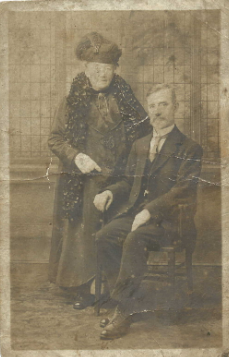
William was the son of George Melville Ronald, born in 1853, and Ellen Boustead, born in 1856, the daughter of a cotton winder.
William’s early years unfolded against a backdrop of rapid urban growth and social change.
Early adulthood
In the 1891 Census, William was recorded as a scholar living at 19 Fifth Row, New Kilpatrick. He had five siblings: John born 1879, George born 1881, Ambrose born 1883, Elizabeth born 1887 and Sarah born in 1880. Their father, George, was working as a machine maker.
William is seen in the 1901 Census, working as an iron driller, still living at home with his parents in Kilpatrick. Despite extensive research, he has not yet been identified in the 1911 Census, leaving a gap in the historical record during a formative period of his life.
In 1913, William was living in a tenement at 13 Mair Street, Buckie. However, by 1914, William had moved south and was living in London.
Marriage
In July 1914, William married Phoebe West in Fulham, London. Their marriage took place just weeks before Britain entered the First World War—a conflict that would shape the course of their lives. Family oral history believes that William’s parents disowned him because he married Phoebe.
Phoebe had been born on July 3rd 1886 in Marylebone, London to Alfred Buckingham West and his wife Helen (Ellen) Phoebe nee Cole. The 1939 Register records this date of birth as 1887.
Military service and the outbreak of war
William began military service on the 26th of October 1916, at the age of 33 with the Kings Own Scottish Borderers. His service number was 126738. Research carried out by his great granddaughter discovered that William was referred to as a grinder as his civilian occupation in his war record.
Grinders were responsible for using grinding machines to remove excess material from workpieces, achieving the desired shape and surface finish. They work in various industries, including manufacturing, metal fabrication, and construction.
He was injured during the war and had received a gunshot wound to his leg and thigh. We find this event in the records, taking place in Etaples, France on 22nd May 1917.
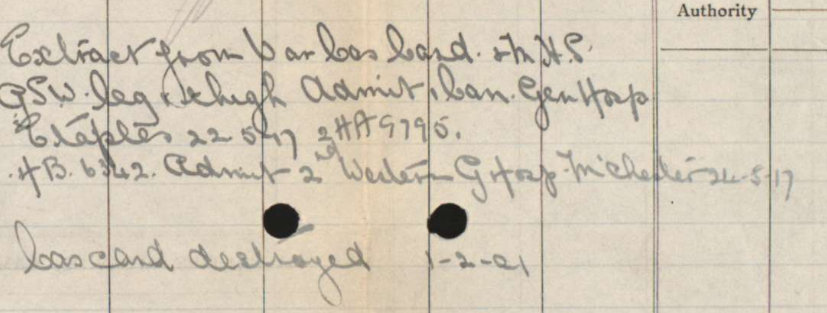
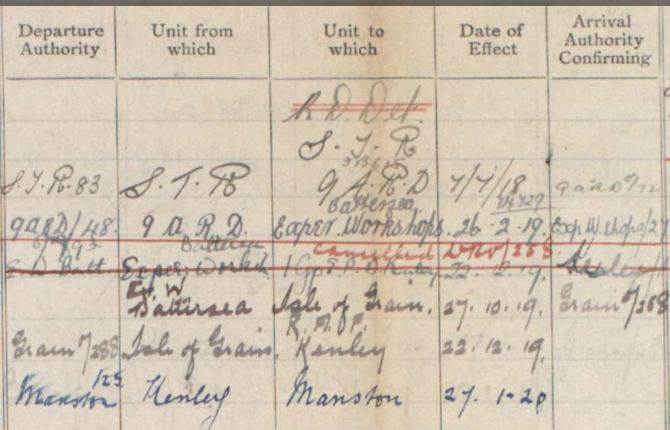
The same war record refers to his daughters, Flora and Helen. We also see reference to his wife, Phoebe. We can see in the records that, post-war in 1919, he was still in the army serving in Battersea, Isle of Grain, Kenley and Manston up until January 1920.
He was discharged on 14th July 1920.
We do not see yet reference to him having a metal plate in his skull as family oral history recalls. He was awarded the British War Medal and the Victory Medal, for his contribution to the war effort.
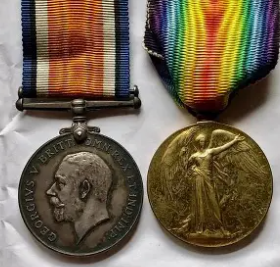
An example of the medals earned by the men.
Like many men of his generation, William returned to civilian life bearing experiences that are now largely unrecorded but, beyond a shadow of doubt, shaped the rest of their lives.
Family life and work
By 1919, we know that William and Phoebe had lived at 101 Heath Road in Wandsworth, London as their home. In the 1921 Census, they are still there. This address remains a constant place in their story for many years.
William was employed as a fitter machinist, working on signal tools, and was recorded as working for Arnel & Helene in Acton. This was skilled industrial work, reflecting both technical ability and steady employment. An electoral role also placed them at this address in 1921.
The 1921 Census also records the couple’s three children’s birthplaces which indicate the family moving between Scotland and different parts of London during the war.
- Helen Emma, born 1916, in Old Kilpatrick, Scotland; it appears that Phoebe went home to Scotland for the birth, as her husband was at war. Helen was likely named after her maternal grandmother, also Helen.
- (Nora) Flora McDonald Ronald (and known as Floss)—born in Acton, Brentford, London. Why she was born here is unknown but Phoebe did have family in the area, so perhaps she stayed with one of her sisters.
- George Alfred Ronald, born in Clapham, London, on 13th July 1920 which is likely the Heath Road home. Perhaps George was named after William’s father.
The fourth child, Rose, was born in Balham in 1921 but after the census date.
101 Heath Road, Battersea – pinpointing William’s decline?
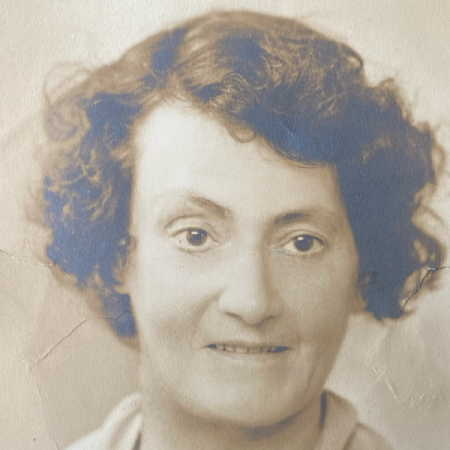
We find William and Phoebe in residential directories for 1924 -1927 in 101 Heath Road. However, in 1933, Phoebe is there without William. From that evidence we can surmise that William was likely admitted to Long Grove between 1927 and 1933. Sometime between those dates William’s mental health deteriorated.
In 1937, Phoebe and daughter Helen were still residing in 101 Heath Road, without him.
Phoebe Ronald nee West
Admission to Long Grove
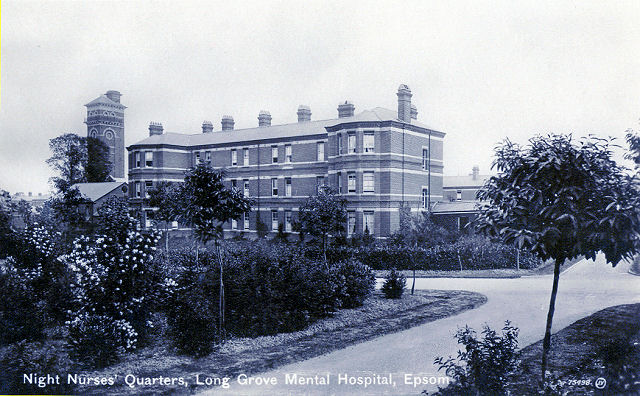
William was admitted to Long Grove Hospital in Epsom, Surrey. We do not yet know what his condition was. We can speculate that his experiences and injuries during the war might have taken their toll. Or it might have been something unrelated.
From our date trail, it is likely that he would have been a resident there before 1933. His stay there was quite long.
Long Grove was a large London County Council mental hospital opened in 1907 as part of the Epsom Cluster. These institutions housed thousands of patients and reflected early twentieth-century approaches to long-term psychiatric care.
1939 Register
In the 1939 Register, William is recorded as a patient at Long Grove. His age is listed as 85—an obvious discrepancy given his birth year of 1884. He should have been recorded as about 55 years old. Such errors were not uncommon in institutional records, but the entry confirms that William was still resident at Long Grove on the eve of the Second World War.
William’s wife and children in 1939 were still living in 101, Heath Road in Wandsworth. Of interest, there is a widower, Phillip Allen living with them, born 15th February 1880. He is a shopkeeper (provisions).

The above change of name indicated for Phoebe, from Ronald to Allen tells us that she remarried at a later date. In fact, she married Phillip Allen 13th September 1947 in Battersea. Family oral history believes that Philip did in fact want to marry Rose, who was very much younger than he was.
Prior to the marriage in 1945, we find Phoebe Ronald and Philip Allen living at 49 Gowrie St, Battersea.
In 1947, we find Phoebe (still Ronald), her son George and Philip Allen living in 30 Granard Rd, Battersea.
Death
William Boustead Ronald died at Long Grove Hospital on the 1st of January, 1941 and was buried in plot no.1715 in Horton Cemetery on 7th January. He was 56 years old. His death occurred during wartime Britain, far from the Glasgow streets where his life had begun.
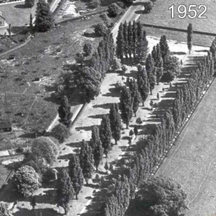
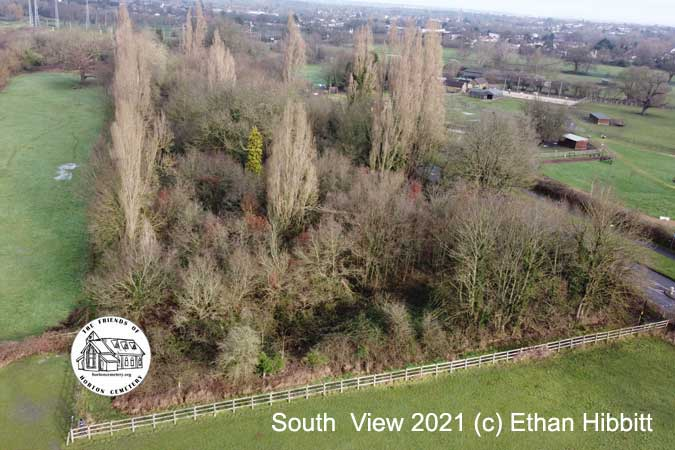
Horton Cemetery had been established in 1899 to serve the surrounding mental hospitals and became the final resting place for close to 9000 patients. Many were buried without individual headstones, their identities recorded only in registers and plot numbers.
Today, Horton Cemetery stands as a historical site—a reminder of the lives lived and lost within the asylum system, and of individuals whose stories survive only in fragments. The Friends of Horton Cemetery are focussed on having the cemetery restored out of respect to those who lie in rest within.
Then …and…now
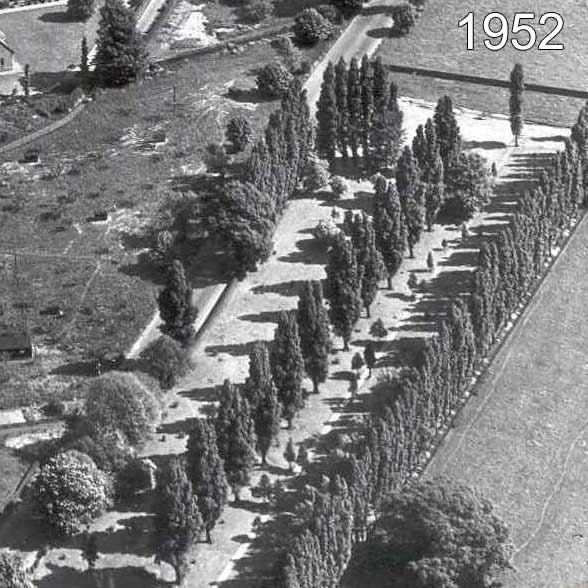
William’s Wife and Children
Helen Emma went on to marry Vincent Snelling in 1940. In 1939 she was described as a millinery stock keeper.
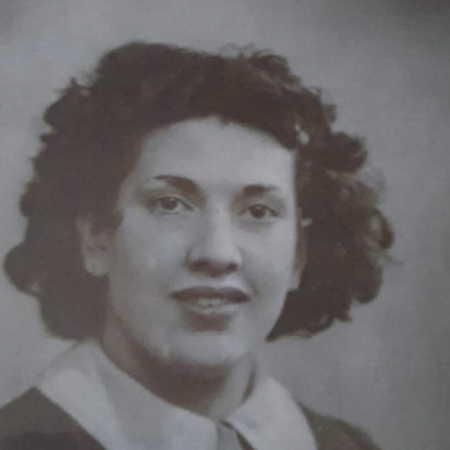
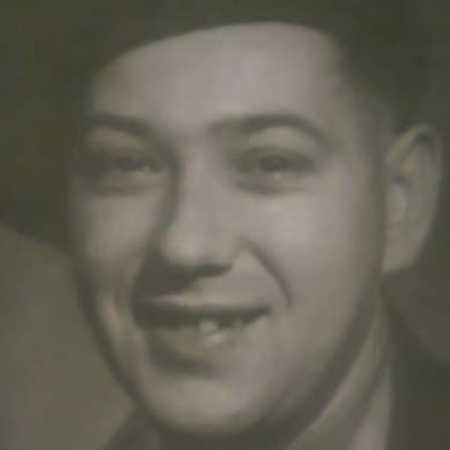
Rose went on to marry Edward John Bevan in 1942. He was born 23 June 1920 in Mountain Ash, Wales. Edward was a sapper in WW2, was hearing impaired and had a hole in his heart. He died of thrombosis on 7th May 1977. A few years before his death, he had an amputation.
She is remembered by her granddaughter as doing tap dancing and also that she wrote sad poetry. Rose died in 2003.
Flora went on to marry Ernest Bright.
George Alfred In 1951 he is living in 30 Granard Road Wandsworth with his mother, Phoebe and Philip
He went on to marry Klara Wall or Schwetzer born 20th October 1916 in 1951. There are two entries for her in the records, with the two names. The entries both have the same marriage reference of 5d 2227 so they are the same person.
In 1952 they are living at 1 Burstock Road, Putney. In 1957 George and Clara are living at 15 Coliston Rd, Putney. In 1959, we find them registered as resident at 15 Haldon Road, Putney.
Family oral history suggested that perhaps George had gone to Australia. It was with this snippet of information that it was possible to find George, indeed on a ship to Australia in 1959.
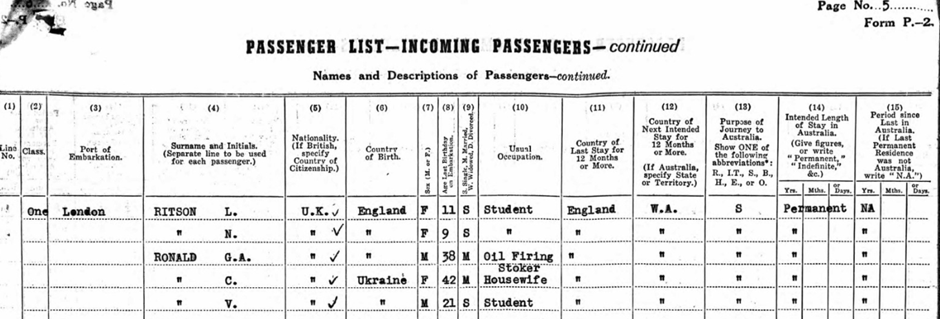
On 23rd January 1959, George and Klara left for Fremantle in Western Australia on the ship named Strathaird. Interestingly, it is this record that reveals a new person. Travelling with them is Victor Ronald, born 15th January 1938. As the record states that Victor and Klara are Ukranian, then we assume he is her son but perhaps not George’s as we have not encountered him before now and he is 21 years old. Victor is not living with them at any of the addresses prior to leaving for Australia. Other records for him have proved elusive to find.
In 1963, we find George and Klara listed as living in Dianella, an area in Perth, Western Australia.
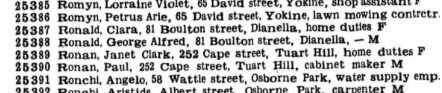
Whatever happened after that in Australia, by 1968 George is living with his mother Phoebe Allen in 9 White House in Wandsworth. By 1971, he was living there without his mother, so perhaps Phoebe died in between. Phoebe likely died on 17th November 1967 and was cremated on 23rd November 1967 in Lambeth.
George died on 20th August 1998 in Wandsworth. Klara remained in Australia and died in 1990.
Summary
William Boustead Ronald’s life can formally be traced through birth records, census returns, military medals, hospital registers, and a grave number. Together, these documents tell the story of a man born in industrial Scotland, a husband and father in London, a wartime serviceman, a skilled worker, and finally a long-term patient.
More importantly, his story is preserved within his family’s oral history. William’s story might have otherwise been forgotten but his descendants have brought his story back and made it part of the history of Horton Cemetery.