
 1
1
 0
0
b.1879-d.1914
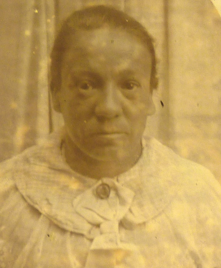
We must remember Maria Johnston, she was born on 27 January 1879. Her birth was registered with her maiden name Maria Emmeline Hubbard. Maria was buried in the Horton Estate Cemetery in 1914.
Maria’s parents were James Hubbard and Mary Ann Maynard; they had married on 27 September 1868 at St. James the Great Church, Bethnal Green, Tower Hamlets. It was the first marriage for both of them.
Together James, a dock labourer and his wife Mary Ann had five children, Maria Emmeline was their fourth.
Dock Workers
Dock workers in London were a significant workforce. Many poverty-stricken families had flooded into the East End looking for work in the latter part of the nineteenth century. They would often find casual labour at the docks.
It was precarious employment and the men faced harsh conditions and low pay, often struggling to make ends meet. The labourers worked at the docks where ships were loaded and unloaded and many were employed on an “on call” system, waiting for work each day with no guarantee of employment.
James, Mary Ann and their family lived around the East End Dock area all their lives.
The children all attended Berner Street School. Berner Street is now called Henriques Street. This area was the scene of the Jack the Ripper murders, at the same time the Hubbard family were living there.
The area consisted of poor housing with overcrowding. The East End then was known as an unsafe and unhealthy place to live.
The Hubbard family rented rooms, moving frequently as was usual at the time.
In 1881 the family were living at 39 Collingwood Street, Bethnal Green. Maria was two years old and they were sharing a house with three other families.
In 1890 Collingwood Street disappeared as part of a slum clearance, and the family moved on to Plough Street Buildings in Whitechapel. These buildings had been erected in 1883. According to a survey of London, they were part of a larger trend of replacing the older houses with new multi story dwellings.
Maria’s father found dead
In October 1890 James Hubbard aged 42 died, he had been found dead. An inquest was held and concluded that he died from natural causes of heart disease.
James left a wife and four surviving children (their eldest child having died as an infant). Maria Emmeline, the subject of this story, was just eleven years old and still at school.
Tragedy was to strike the family again, three months later on 27 Jan 1891, when the eldest daughter Mary Ann Alice Hubbard died of pneumonia aged eighteen. She had started work as a domestic servant. The winter of 1890-91 had been an exceptional cold spell, lasting from November 1890 to the end of January 1891.
The 1891 Census shows Mary Ann Hubbard and her now three surviving children still living in Plough Street Buildings in Whitechapel. William the eldest was 16 and was working as an errand boy at the docks. The two youngest, Maria Emmeline and Walter were still at school. Mary Ann, who was recently widowed, had now taken on a job as a ‘fur sewer’.
Fur Sewers
A ‘fur sewer’ in Victorian London likely refers to work in the sewer system. A fur sewer worker was responsible for clearing blockages and inspecting the sewers. They were often referred to as ‘toshers’, who would also scavenge valuable items from the sewers as they worked. Although, this could also have been that she indeed worked with fur.
Maria would have needed to leave school as early as she could to help her mother and two brothers. We don’t know what she did.
Maria Marries James
When aged 18 years of age in 1897, Maria Emmeline Hubbard married James Henry Johnston, at St Philip’s Church in Stepney; her husband was 20.
James gave his occupation as a carman. In Victorian times, a carman was essentially a modern day delivery driver, but using horses and carts to transport goods. Carmen played a crucial role around the docklands area, facilitating the movement of goods arriving by ship.
The year after their marriage, James and Maria had their first child, named James Henry Johnson, like his father. He was born on 26 April 1898 at 39 Jane Street in St George in the East.
The family rented one room and shared the house with two other families. They stayed here several years and their first four children were born here. Maria didn’t appear confident in her literacy and often signed her name with a cross. On her marriage certificate her writing is unclear.
School was only made compulsory for 5-10 year olds in 1880 but many children worked and truancy was a problem due to the fact that parents could not afford to give up any income earned by their children.
James and Maria had a second child who was born on 18 July 1899, she was named Maria Elizabeth Johnson.
Loss and Grief
The timing of her birth was difficult, as three weeks later on 12 August 1899, their first child James died. He was just 15 months old and had been admitted to the Infirmary at St. George in the East. His death was caused by exhaustion from bronchitis. Maria Emmeline was just twenty years old and the death of her toddler must have made it an anxious time for her as a new mother.
Little Maria Elizabeth was followed by three more children, Robert James Johnston born 1901 Alice Emily born 1904 and the last child Caroline Elizabeth born 1909.
By the time of Caroline’s birth Maria was thirty years old; she had lost not only her father but also her mother, her older brother and her only sister. Life was fragile.
Maria’s brother William had died in 1902 aged 27, after an accident whilst working at the docks. Maria’s mother was just 55 when she died in 1907 of bronchitis and heart disease. Maria had coped with much loss and sadness. Now the only other family member was her youngest brother Walter.
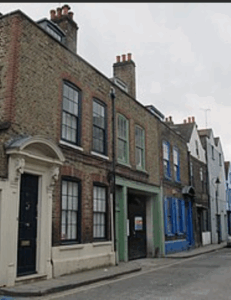
In 1911 Maria, her husband James had been married 14 years and they were living with the three oldest children in three rooms at 37 Red Lion Street, Wapping. James was working as a carman for an iron and metal merchant.
They shared that house with three other families and they lived there for several years. Maria and James’s last child Caroline who was born in 1909 was not with the family and cannot be found on any census. Caroline would have been just two years old. The older children were now all attending school.
The tragic death of Caroline
The next sighting we have of Caroline is a death record, she died on 25 November 1912 at St George’s Infirmary. Her death certificate is unusually graphic and states the cause of her death was violent, ‘shock from burns caused by playing with the fire, while wearing a flannelette frock, during the temporary absence of her mother’. Caroline was three years old and must have been living back home with the family.
The coroner sounded angry. Looking at a newspaper entry a few days after Caroline’s death, there is an open letter to Ellis Griffith Esq. M.P., Under Secretary of State reminding him that many deputations had been made to save the lives of young children, who died as a result of burns.
It goes on to say that there were about 600 fatal accidents a year in England and Wales. The biggest cause was flannelette and about 90% of poor people’s children wore flannelette, as it was cheap and warm. The wish of the deputation was that the material should conform to some safety standards. These flannelette materials was costing an average of two lives a day
The coroner at Caroline’s inquest was Mr Wynne Edwin Baxter. He had also conducted inquests on Maria’s father and brother. His words on little Caroline’s death certificate point to some of the frustrations of these needless deaths.
Nearly all these accidents involved flannelette and an unguarded fire that occurred during a mother’s absence from home, with young children being left unattended or under the supervision of an older child. Fireguards were an expensive purchase for the working class household where one room was hub of activity, central to which was the fire grate, and the families source of heat during the cold winter months. It was also used throughout the year for cooking, boiling the kettle and heating water for washing clothes.
Little Caroline’s death certificate seems to record the coroner’s frustrations rather than blame. The verdict at the inquest was accidental death. Although Maria was out, it is possible the older siblings were there.
We don’t know how Caroline’s death affected Maria. She still had three young children to care for. She also worked as a charwoman to supplement the income. Life would not have been easy.
Maria is admitted to Horton
On 29 October 1914 Maria was admitted to Horton Asylum for what it says was her first episode of her illness. On admission she was in a state of excitement. She was disorientated and unintelligible, with a rapid flight of ideas. With such restlessness Maria was kept in a padded room for her safety.
There wasn’t a lot of time to assess Maria as she died less than a month later of pneumonia. Her case notes are brief and not very informative.
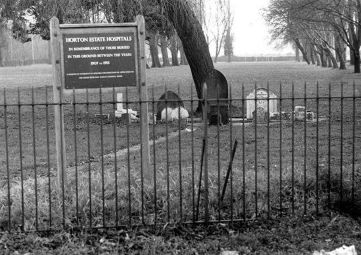
Maria Emmeline Johnston was buried in The Horton Estate Cemetery on 1st December 1914.
Authors Notes
After he was widowed James Johnston went on to marry Catherine Harris and then was sadly killed in action in World War 1.
James and Maria’s lives were full of tragedy and both cut short, both must be remembered.