
 0
0
 0
0
b.1864-1912
Birth and childhood
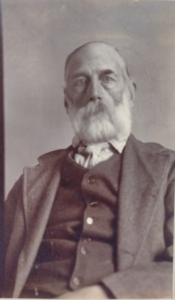
John French was born in Brighton in the first quarter of 1864 to Henry & Emma French (nee Brown/Attrill*) and baptised at St. Mary Magdalene, Brighton on 6th June of the same year. Henry & Emma had married 10 years earlier on 24 April 1854 at St. Nicholas, Brighton. John was their fourth child and first-born son. Henry had been born in Worthing and Emma in Shoreham.
[*John’s mother Emma Brown was born prior to her mother Jane Brown marrying James Atrill and used both surnames throughout her life]

At the time of John’s birth, Brighton was a bustling, diverse Victorian seaside resort, and a popular escape for Londoners, with grand hotels, piers, and a lively seafront. However, at the same time, there was serious overcrowding and slums.
On the 1872 Census, John is 6 years old and living at 40 Richmond Buildings, Brighton with mother, Emma aged 34 and siblings Julia 15, Jane 13, James 11, Emma 8, Minnie 4 and Charles 15mths. John’s mother is working as a ‘dressmaker’ and states that she’s a widow but when I found the family on the 1881 Census I discovered that John’s father was not dead after all!
[Richmond Buildings: A former street between Richmond Street and Albion Hill, it was condemned for demolition in 1958; source: https://www.brightonhistory.org.uk/streets/streets_r.html ]
Ten years later on the 1881 census, we find that the family have moved to south London. John aged 17 is living 126 High Street, Fulham with parents Henry & Emma and siblings Julia 24, Minnie 15, Charles 10, Marian 8, George 2 and Henry 1. John is still at school and his father is working as a ‘house painter’.
Marriage
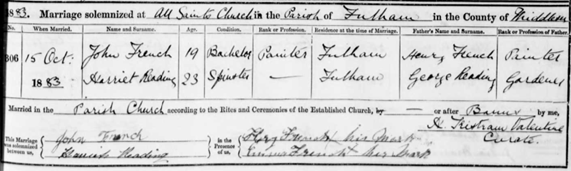
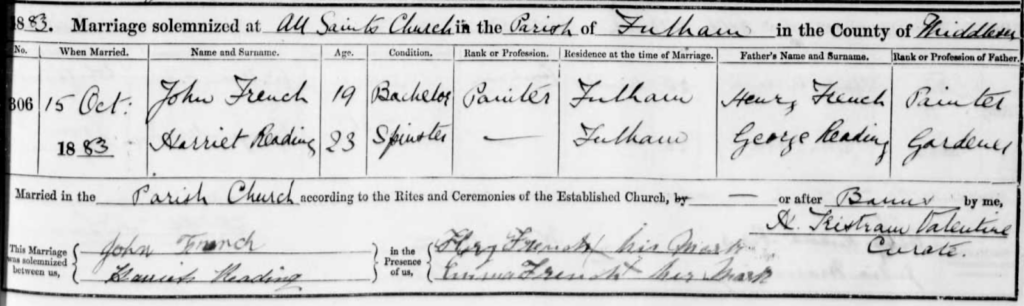
On 15 October 1883 John married Harriet Reading at All Saints, Fulham; John was just 19 years old and Harriet 23years old. Harriet had been born in Leamington in Warwickshire in 1855. John’s occupation is ‘painter’, a trade he continued working in for the rest of his life.
In 1884, Harriet gave birth to a son, Henry Frank who was baptised on 13 February 1884 at St. Mary’s Putney; sadly Henry didn’t survive long and he was buried on 10 April 1884 at St. Mary, Putney.
Census
On the 1891, 1901 and 1911 census, John & Emma are living at 16 College Street, Putney. In 1891 they are sharing the house with the Dixon family but by 1901 the Dixon’s have left and been replaced with the Gratton family. Alfred Gratton is working as a ‘house painter’ so perhaps John and Alfred worked together.
John & Harriet are still sharing the house at the time of the 1911 Census but this time with the Cooke family.
[NB. College Street was at some point renamed and is now Wadham Road, just south of Putney Bridge]
Sadly, John & Emma were unable to have children. We learn later from the asylum notes that they had had one child (probably still-born as it is not mentioned on the 1911 Census) and a miscarriage.
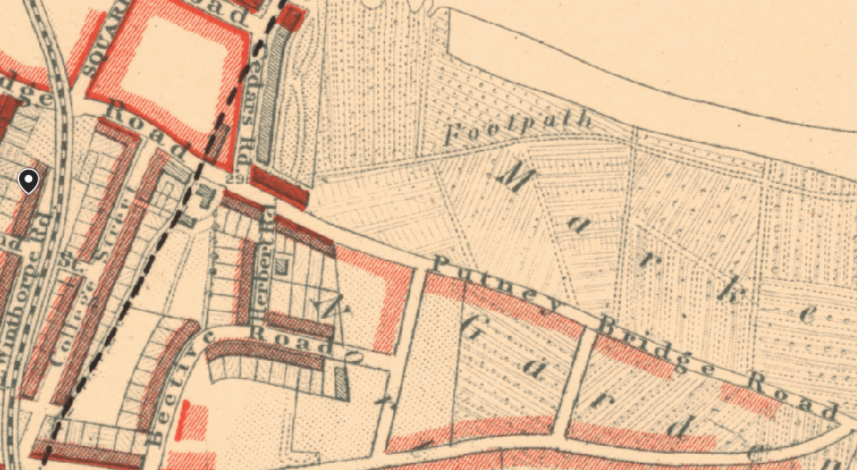
John Booth’s poverty map describes College Street as “mixed with some comfortable, others poor”.
Asylum
Just over a year after the 1911 Census was taken, on 7th May 1912 John was admitted to the Horton Asylum. At the time he was still living at 16 College Street, Putney. The notes describe his physical health as ‘poor’, he’s 5ft 7in and weighs 8st 8lbs. He’s suffering from ‘stupor’ and is ‘unresponsive’, doesn’t speak and “lies in bed without taking any notice of his surroundings”. The history section of the notes indicate that he was “cheerful until 4 months ago” and friends say he’s sick “through worry about sufficient work”.
Before his admittance to Horton Asylum, there was no evidence in any records to suggest that John had previously experienced mental health issues. Nevertheless, the notes taken at the time of his admission indicate that his condition may have been hereditary. Specifically, they reference a sister, aged 53, who was admitted to Banstead Asylum on 18 September 1911 with a diagnosis of “secondary dementia”.
Initially I struggled to work out which sister this referred to (Jane or Emma) as I was unable to confirm their marriages but eventually, I discovered that Jane had married Charles Hunt in Brighton in 1893 and Emma had married John Piper in Fulham in 1898. That led me to find Jane Hunt on the UK Lunacy Patients Admission Register. Jane’s stay at Banstead was quite short – admitted on 19th September 1911. She died less than two years later on 16th February 1913.
John’s stay at Horton was also brief. Admitted in May 1912, he died on 25th October 1912 at 10:30am. The cause of death is given as ‘general paralysis of the insane’ (i.e. Syphilis) and pneumonia. He is buried in Plot 1890a.