
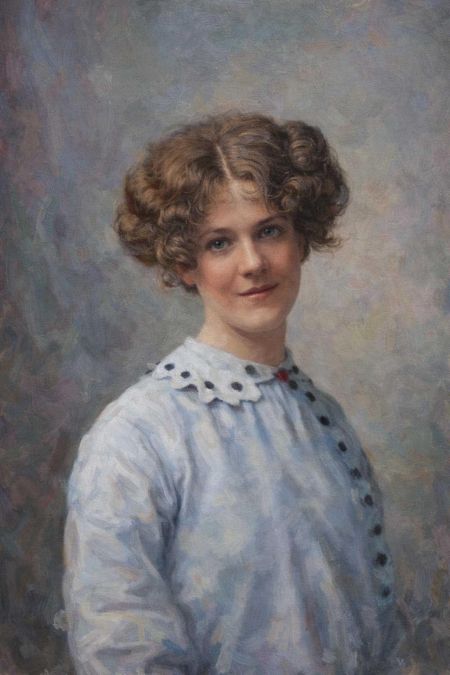
 0
0
 0
0
b.1886-d.1936
Family Oral History
This life story was essentially written by a descendant of Cecy. Cecy was his great grand aunt, the younger sister of his great grandfather, William John. The delight of receiving such detailed information about one of those buried in Horton Cemetery is that it allows us to present a personal reflection on the relative.
Sadly, there was no one alive who remembers Cecy. Oral stories came down through the family, specifically from Cecy’s sister-in-law Theresa, who was married to Cecy’s brother Arthur.
In turn, this information was passed down to Cecy’s grand-niece who was lucky to meet someone, Ivy Sutton, who had actually known Cecy. She had been brought up alongside Cecy and her siblings at Digbeth Mill and could recall Cecy having travelled to South America in 1913.
The Life Story of “Cecy”
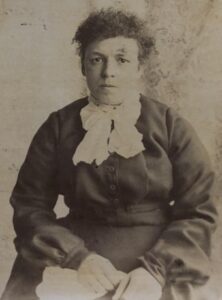
Sarah Louisa Kember, affectionately known as “Cecy,” was born on 17 September 1886 at 281, Witton Road, Aston Manor, Birmingham, the only surviving daughter of William James Kember and Sarah Louisa Kember (née Owens).
Her birth brought deep joy and comfort to her parents, who had endured a series of heart-breaking losses before her arrival. It was thought that the origin of the name Cecy started as an affectionate pet name, as she was the only surviving daughter.
Their first son, Ernest Kember, died in 1878, aged only 12 months. The following year, their daughter Edith Violet Kember also died in infancy, aged eight months, on 14 October 1879. In 1881, their little girl Eva Caroline Kember passed away aged seven years and five months, and in 1883, they lost another son, Charles Herbert Kember, who died aged three months on 10 March 1883.
These early tragedies must have cast a long shadow of grief over the household.
When Cecy was born five years later, she became a cherished and deeply loved child — the only daughter to survive into adulthood. Cecy was baptised Sarah Louisa on March 11th 1888.
Strong Family Ties
Cecy grew up in a close and loving household alongside her brothers — William John, Arthur, and James Ernest, with whom she shared a lifelong bond. By the 1891 Census, the family was living at 303 New John Street, Birmingham. By 1901, they had moved to 25 Murdock Road, Handsworth, where Cecy, then fourteen, lived with her parents and siblings.
Of interest, there is a 5 year old visitor staying with the family at the time of the 1901 Census, Edith M Bracey. She had been born in 1896 in Walsall, her mother’s maiden name being Baker. Edith May Bracey’s mother had died earlier this year. She went to live with ‘Auntie Kember’.
Cecy’s mother, Sarah Kember née Owens’s brother was William Warren Owens and he had married Louisa Baker. Her sister Elizabeth Bracey nee Baker was Edith’s late mother. Cecy’s mother was known to have taken in children- they called them Auntie and Uncle Kember’.
In 1921 Edith was working as a typist in Birmingham living with an aunt, Julia Druscilla Jones nee Baker. Edith May Bracey spent many years living with her. Edith May Bracey emigrated to Ontario, Canada in 1949, where she already had family. She married William Corfield on 1 March 1950.
A Happy Childhood
Cecy’s childhood in Handsworth was filled with affection and adventure. She loved visiting Handsworth Park, where she spent long afternoons by the lake, and she formed a cherished friendship with Gladys Homer.
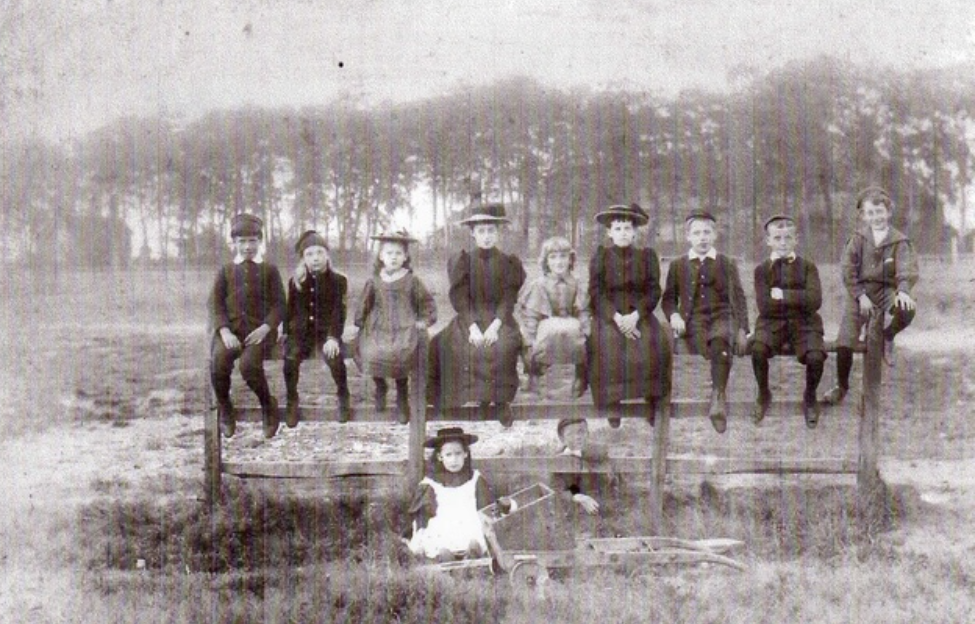
Handsworth Park. C. 1893. Siblings Arthur Kember (7th from left) and Cecy Kember (3rd from left) at Handsworth Park with other children.
The older girls in black dresses were paid to look after them on days out locally.
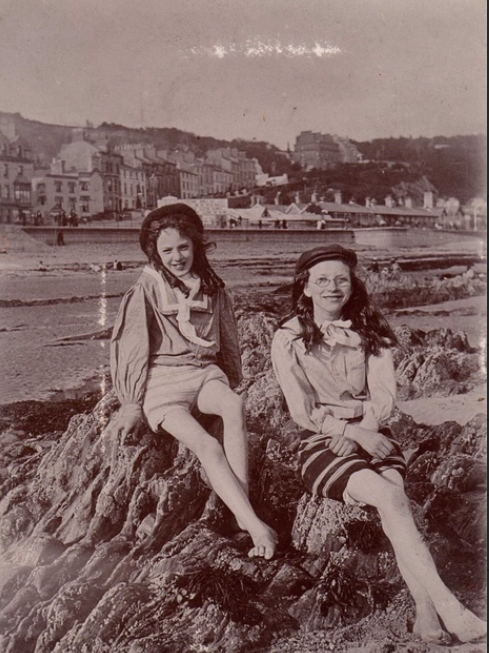
In 1898, Cecy and Gladys travelled with their families to the Isle of Man — a seaside holiday that left her with joyful memories of youth and freedom.
Independence and Quiet Strength
Between 1901 and 1913, the Kember family settled at Digbeth Farm, a smallholding in Northfield, Birmingham. Life there was industrious and comfortable.
Cecy’s mother, Sarah Louisa, managed the smallholding, while her husband worked as a Commercial Traveller for the Birmingham engineering company W. Canning & Co. The farm produced 20 to 30 gallons of milk daily. Cecy’s mother also kept poultry and oversaw several rental properties across Birmingham and Northfield.
In addition to being a capable businesswoman, she was an active Suffragette, instilling in Cecy a belief in independence and quiet strength.
In the 1911 Census, Cecy’s parents were living at Digbeth farm, Northfield, with their grandson, William James Kember aged 7 years. He was the eldest son of William John Kember and Rose Eliza Kember nee James.
Cecy Marries Billie
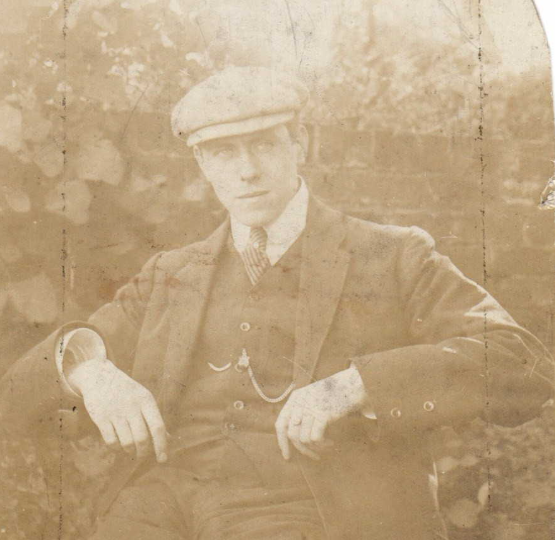
It was during these years in Northfield that Cecy met William Sampson “Billie” Coward, the son of a missionary from Falmouth, Cornwall.
Billie was thoughtful, civic-minded, and politically active — a registered member of the Reform Club in Ipswich and a Liberal Party candidate — deeply committed to public life and social reform.
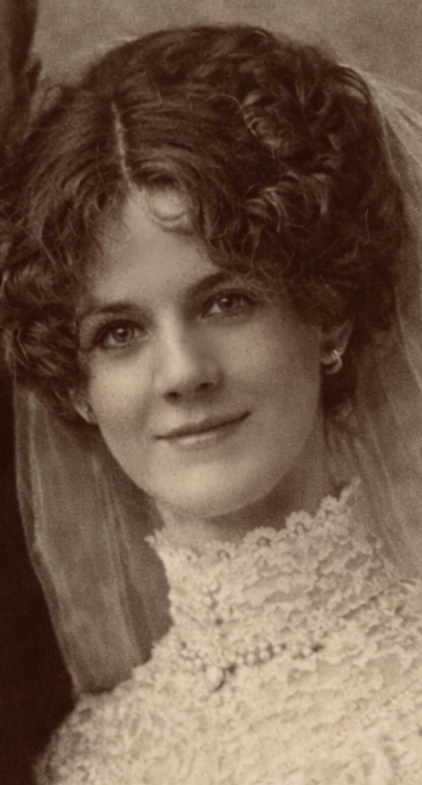
On 29 August 1910, Cecy and Billie were married at St Laurence Church, Northfield, Birmingham, surrounded by family and friends.
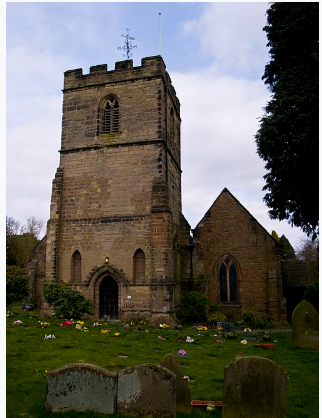
On their marriage certificate, Billie was listed as a secretary to a Member of Parliament. Their union was one of mutual respect and shared values, though they never had children.
Travel to South America
In November 1913, Cecy and Billie embarked on a significant journey, travelling first class, aboard the paddle steamer S.S. Highland Watch, to Buenos Aires, Argentina.
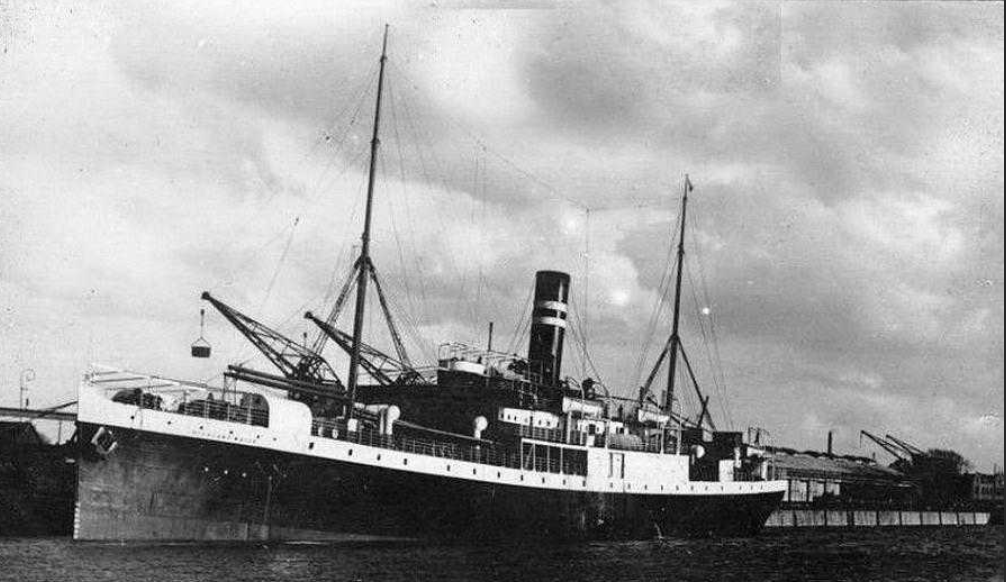
It is believed that Billie had accepted a post as an executive officer for the Ministry of Food.
Little is known of their time in Buenos Aires, but they remained there for a period before returning to England during or shortly after the First World War.
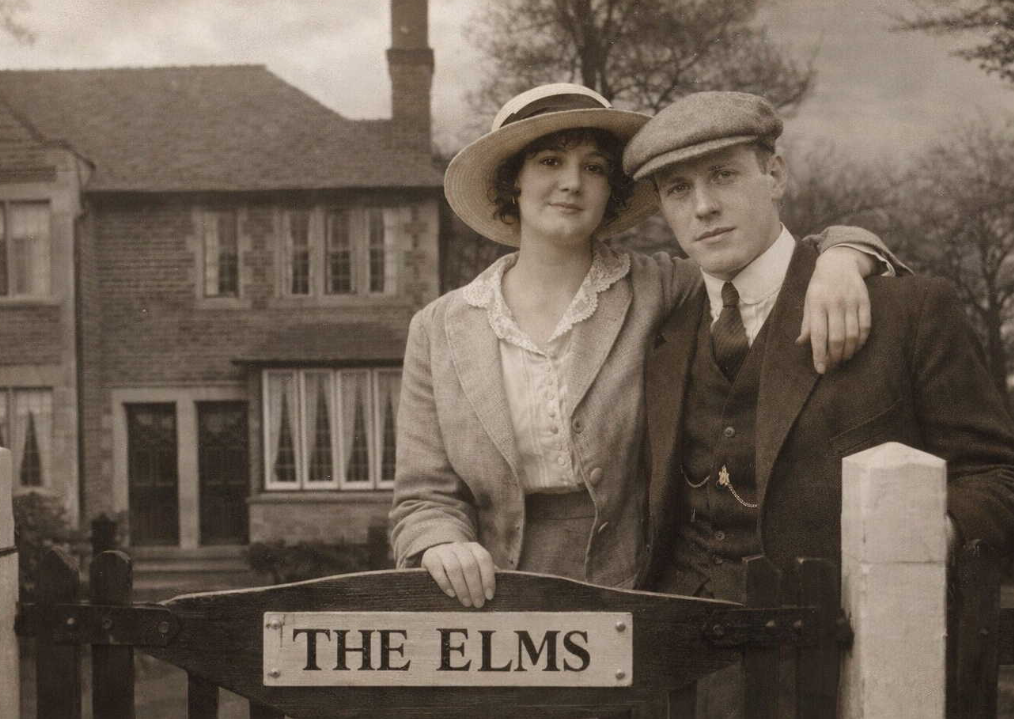
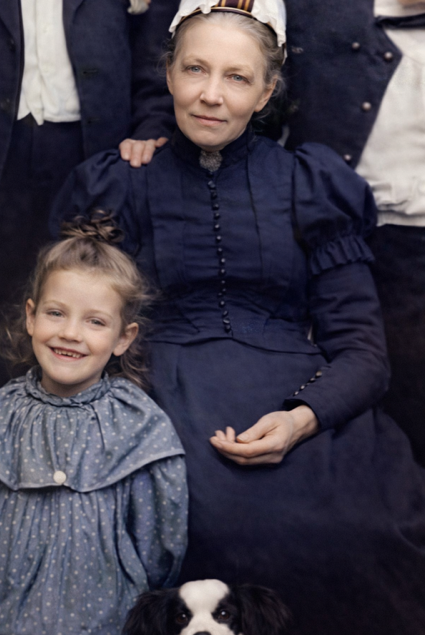
By 1916, Cecy and Billie were back in England, living with her parents at “The Elms,” Coopers Hill, Alvechurch — a peaceful country home surrounded by gardens and rolling fields. On 25 July 1916, Cecy wrote to her sister-in-law Theresa (wife of her brother Arthur) saying that she and Billie would be staying there “for an indefinite period.”
Cecy’s grandmother, Sarah Owens (née Hemming), was also living at The Elms but sadly died there on 21 September 1916. The photo is Cecy and her grandmother in about 1890.
Service to the Community
During and immediately after the First World War, Billie played a prominent civic role in Birmingham as Chief of Staff at the Birmingham Citizen Committee, a body dedicated to improving local welfare and social conditions during a time of great hardship.
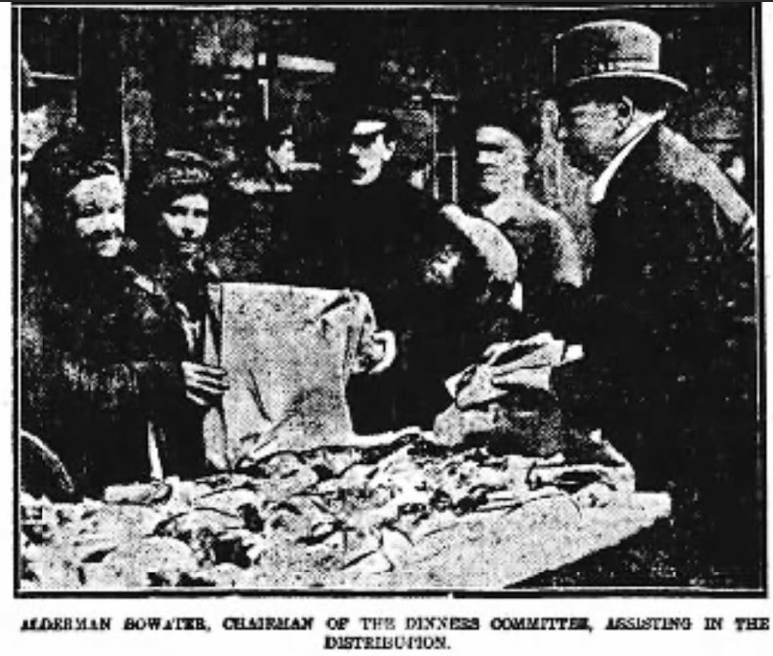
Newspaper archives from 1915 to 1920 record that both Billie and Cecy volunteered tirelessly, helping to distribute up to 1,100 Christmas meals each year to Birmingham’s poorest citizens. Their service — practical, humble, and compassionate — reflected their shared commitment to community and public good.
Newspaper Cuttings. 1915-1918. William and Cecy helped at Birmingham Citizens’ Committee to provide thousands of Christmas Dinners to the poorer people of Birmingham.
Not long after this period, Cecy’s parents, William James and Sarah Kember, moved from their home at The Elms to retire to a charming cottage called “The Nest” in Lowsonford, Henley-in-Arden. Set within four and a half acres of gardens and orchards, and surrounded by rolling fields and mature trees, The Nest offered a peaceful retreat where William and Sarah could enjoy the serenity of country life in their later years.
The loss of her father
Tragically, this idyllic period was cut short when William died suddenly on 27 January 1920. In his last will and testament, he arranged for his estate ( £3221 3s 4d) to be divided equally among his four children, with the assets held in trust until the death of his wife, Sarah.
The estate included not only The Nest but also several leasehold properties across Birmingham — among them Nos. 2, 4, 5, and 6 Sycamore Road, Smethwick, and Nos. 95 and 97 Nelson Street, Birmingham, along with leasehold apartments near Northfield railway station.
In addition to these assets, William left personal bequests: Cecy received a diamond ring, while her husband, Billie Coward, was given three fine scarf pins and a gold signet ring. Following William’s death, the properties were sold by public auction at the Grand Hotel, Colmore Row, Birmingham, on 11 May 1920, marking the end of one chapter of the Kember family story.
Life in the 1920s and Separation
By the 1921 Census, Cecy and Billie were living at 110, Bristol Road, Northfield, Birmingham, as boarders in the home of Marjorie and William Jackson, along with several other lodgers. Billie was recorded as unemployed, indicating that their financial situation had become uncertain.
In 1922, we find Billie, William Sampson Coward, still registered as resident at 110 Bristol Rd; Cecy is not mentioned.
Between 1925 – 1930, Billie was resident at 19 Mayflower Rd Brixton. Cecy is not mentioned. He was living with his sister, Bridget Sampson Hewitt, and his brother-in-law, Philip Ebenezer Hewitt. By 1931, there was no mention of him there.
On Cecy’s death certificate it states under occupation ‘wife of Coward, occupation unknown’ This would suggest that Horton Hospital didn’t know his name or occupation. We don’t know if Cecy received visitors.
Nobody knows if and when Cecy and Billie Coward separated but the above evidence does suggest this.
Cecy’s Business – “Miss Cecy Hemming, Complexion Specialist
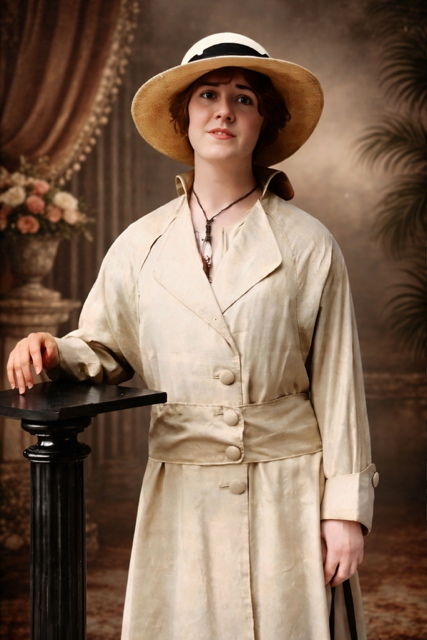
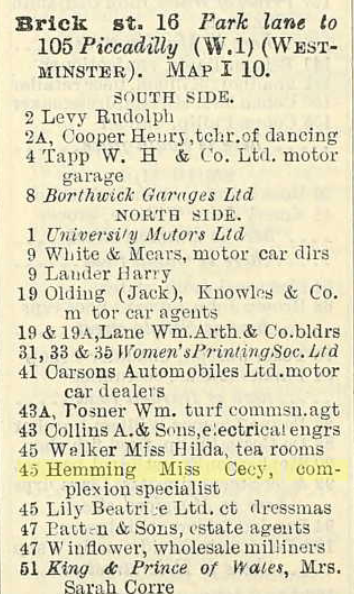
Soon after the 1921 Census, Cecy. Taking her grandmother’s maiden name and inspired by her grandmother’s memory Cecy set up a beautician’s salon called “Miss Hemming” at 45, Brick Street, Piccadilly, W1, London, likely in the early 1920s.
The exact date of its opening is not known. She describes herself as a complexion specialist.
The salon was more than a fashionable establishment — it was a serene, elegant retreat that reflected Cecy’s refinement, discretion, and professionalism.
Her understated grace quickly drew an elite clientele, and among them, it was said, was His Highness Aga Khan III (Sultan Mahomed Shah), who admired her quiet skill and poise.
In 1925, Cecy’s business is advertised in trade directories as “Miss Cecy Hemming, Complexion Specialists, 45 Brick St., Piccadilly W1.” Furthermore, Cecy’s residence in 1925 is confirmed.
It also appears to be advertised in newspapers from 1925 under the name ‘Nadora — Beauty Specialists’ (located at 45 Brick-Street, Piccadilly, W1), offering expert tuition in complexion treatment, electrolysis, hairdressing, and other beauty services, with the advertisement reading:
“An excellent profession for ladies — become a beauty specialist. Thorough expert tuition given in complexion treatment, electrolysis, hairdressing, etc. Good positions obtainable at once.”

The loss of her mother
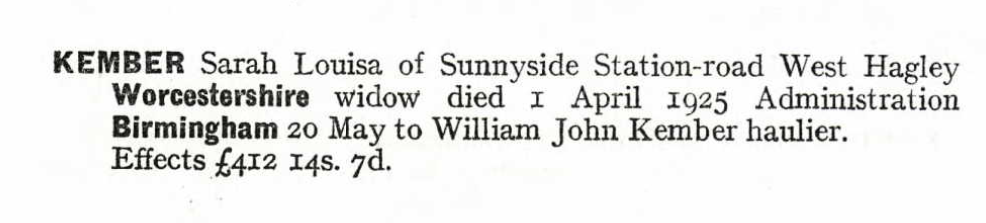
Cecy’s mother, Sarah Kember, continued to live at Sunnyside, Station Road, Hagley, Birmingham, a smaller, warmer property she had moved to after her husband’s death in 1920. She remained active and deeply committed to the suffragette movement, attending women’s rights events in Birmingham.
Her sudden death on 1st April 1925 must have been a terrible shock and a heartbreaking loss for Cecy. With her mother’s passing, Cecy finally received her equal share of the family estate, though the joy of inheritance was tempered by grief.
Cecy’s mother left her £412 14s 7d estate to her eldest son William John Kember. Most of this was divided between her grandchildren.
Change in Circumstances
On 5 May 1925, Cecy wrote to her brother Arthur and sister-in-law Theresa on headed paper from “Miss Hemming”:
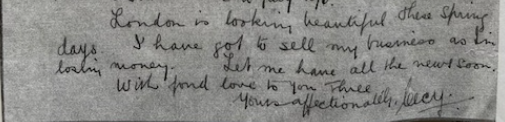
“You will not be surprised to hear after the avalanche of troubles I have had to face alone that, on my return to town, I collapsed with nervous prostration. I am glad to say that I am now able to attend to business though feeling not too good. However brighter and better days are in store for all of us I hope. I have got to sell my business as it’s losing money.”
The term ‘nervous prostration’ was used to describe a state of extreme physical and mental exhaustion resulting from prolonged stress, anxiety or overwork, possibly what we would call today a mental breakdown.
As the decade went on, the challenges she described deepened. Economic difficulties, changing fashions, and post-war austerity took their toll and Cecy’s beloved salon began to fail.
A Receiving Order
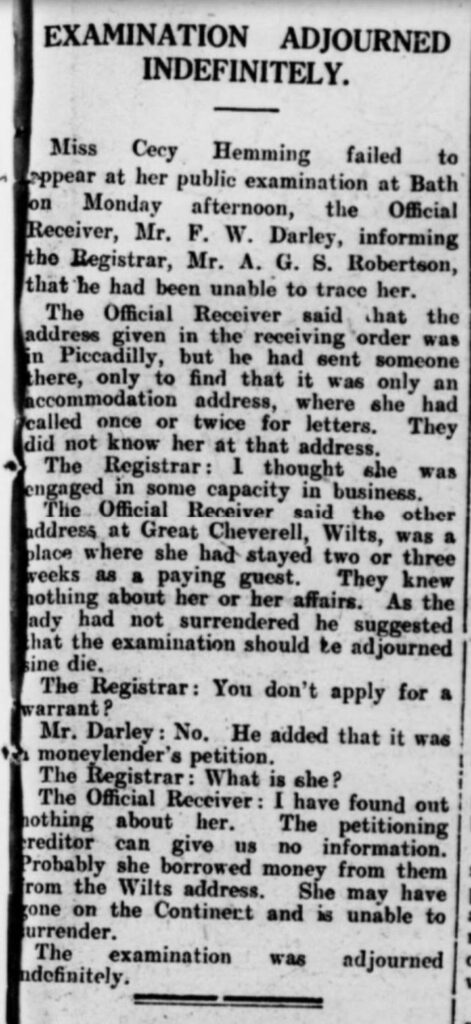
By 1926, newspapers were reporting an order in bankruptcy against Cecy Hemming, spinster, of 170 Piccadilly, London, formerly residing at The Rectory, Great Cheverell, Wiltshire.
170 Piccadilly had been given as a residential address when actually it was in fact a business or ‘Egyptian House’.
The following article confirms that it was given as a false address but she had collected letters from there.
It appears that Cecy had paid to stay 2 -3 weeks at the Rectory, in Wiltshire, but the residents there didn’t know anything about her there.
As they had been unable to find her through enquiry, the receivers had assumed she had gone to the continent.
Why had Cecy chosen to spend time at the Rectory? The Census returns show no obvious links to any people there.
Travel to Australia
Personal tragedy soon followed. On 8 September 1928, Cecy’s beloved brother James Ernest Kember died suddenly at work. They had always been exceptionally close, and his death deeply affected her.
At some point after 1928, Cecy sought a new start and travelled by paddle steamer to Sydney, Australia. It is thought that the inheritance released from her father’s estate after her mother’s death gave her the means to fund the voyage. Little is known of her time there, but family belief holds that she eventually returned to England “as a woman in distress.”
In 1930, husband, William Sampson Coward, was living at 29 Mayflower Rd, Brixton.
Shipping records confirm that on 3 December 1931, Cecy arrived alone at the Port of London aboard the ‘Largo Bay’, returning from Sydney. Her proposed address was in Northfield, Birmingham, close to her family roots.
Entry to Hospital
After her return, Cecy was believed to have been admitted as a privately paying patient to Peckham House Mental Hospital, 112 Peckham Road, London. Records for this hospital no longer exist.
On 1 March 1932, she was transferred to Horton Hospital, Epsom, Surrey, where she would spend the remainder of her life. Little is known of her years at Horton, though she remained there in care until her death.
It appears that mental illness first presented itself in 1925, according to Cecy’s letter, and then again in 1929 when she was in Australia.
Cecy died on 14 September 1936, aged 49. Her death certificate lists her address as Leytonstone, notes her previous residence as Australia, and records her cause of death as Acute Double Lobular Pneumonia (3 days).
She was buried at Horton Hospital Cemetery on 29 September 1936, in Grave 1379b. Sadly, there is no memorial to Cecy in the cemetery, and her resting place remains unmarked.
Billie’s Life after Cecy’s death
After Cecy’s death, Billie returned to his native Falmouth, Cornwall, where he spent the remainder of his life. He died on 11 September 1944, aged 69. He left a sizable inheritance to a Falmouth born artist/banker.
Through her life, Cecy had lived with grace, independence, and courageousness, showing the confidence to travel the world at a time when few women did. However, her later years, as an inpatient at Horton Mental Hospital, were in stark contrast to the freedom and purpose that had once defined her life.
Though her story ends quietly, Sarah Louisa “Cecy” Kember Coward remains remembered as a woman of dignity, compassion, and perseverance.
From her Birmingham childhood and her mother’s thriving smallholding at Digbeth Farm, to her own independent spirit shaped by suffragette ideals, her elegant London salon that drew society’s elite, her charitable work in Birmingham, and her travels across the world, Cecy’s story stands as a testament to courage, resilience, and the quiet strength of a woman ahead of her time.
Horton Cemetery
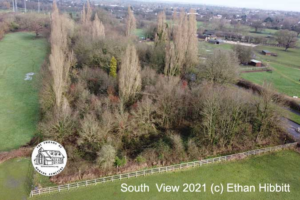
This 4.5 acre cemetery containing the bodies of 9,000 mental health patients was sold by the NHS to a small local (to Epsom area) developer in 1983. Since the cemetery was first opened in 1899 until the day it was sold the cemetery was kept in pristine condition by hospital workers.
From the day of sale until today the owner has allowed this precious ground to become completely overgrown by trees, shrubbery and ground cover. It is inaccessible to the family members who might wish to visit the resting place of their ancestors. https://eehe.org.uk/24725/hortoncemetery/